QCentroid at Seoul’s Quantum Finance Forum | Quantum computing in finance

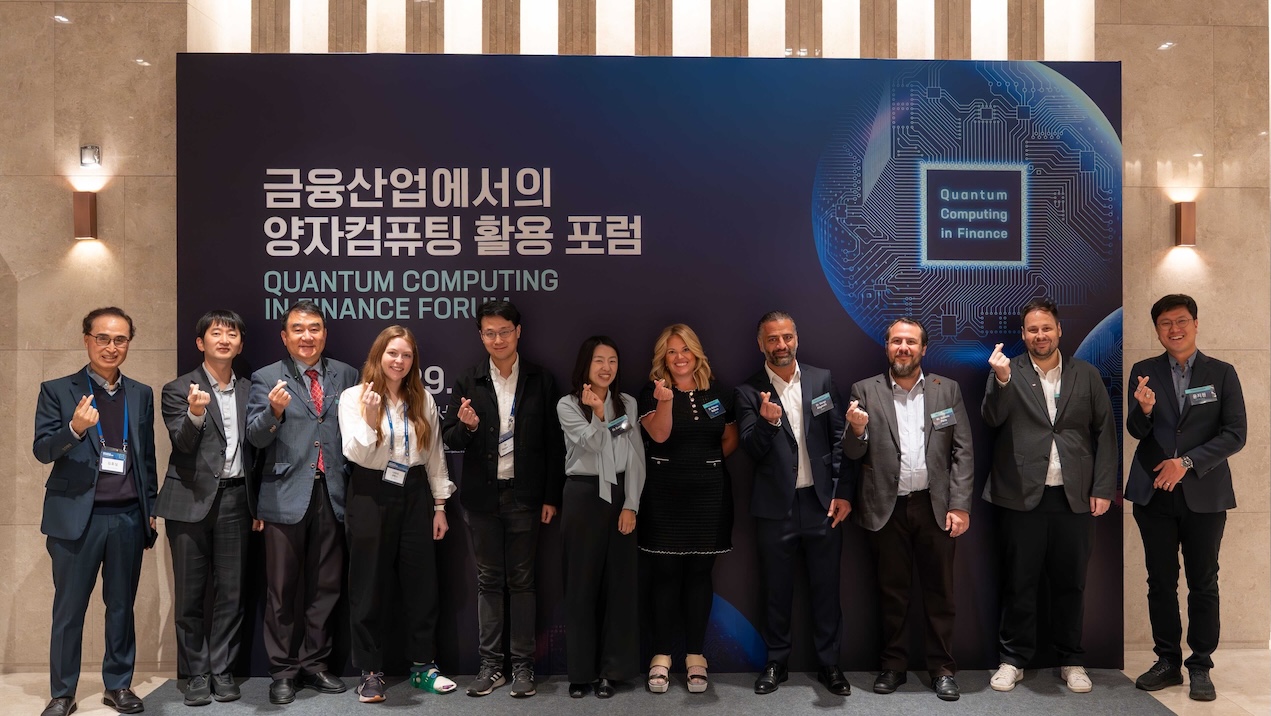
An impactful week for QCentroid in Seoul! 🇰🇷

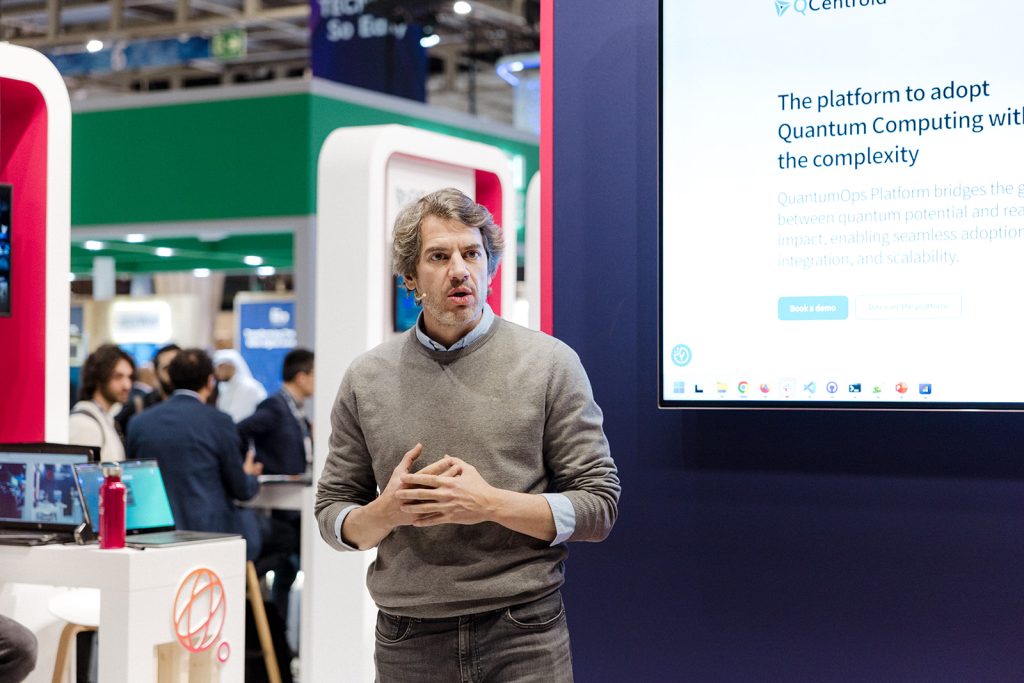
Our Co-founder, Antonio Peris, presented at the Quantum for Finance Forum, sharing how QCentroid’s orchestration platform unlocks quantum and advanced computing for practical enterprise use.
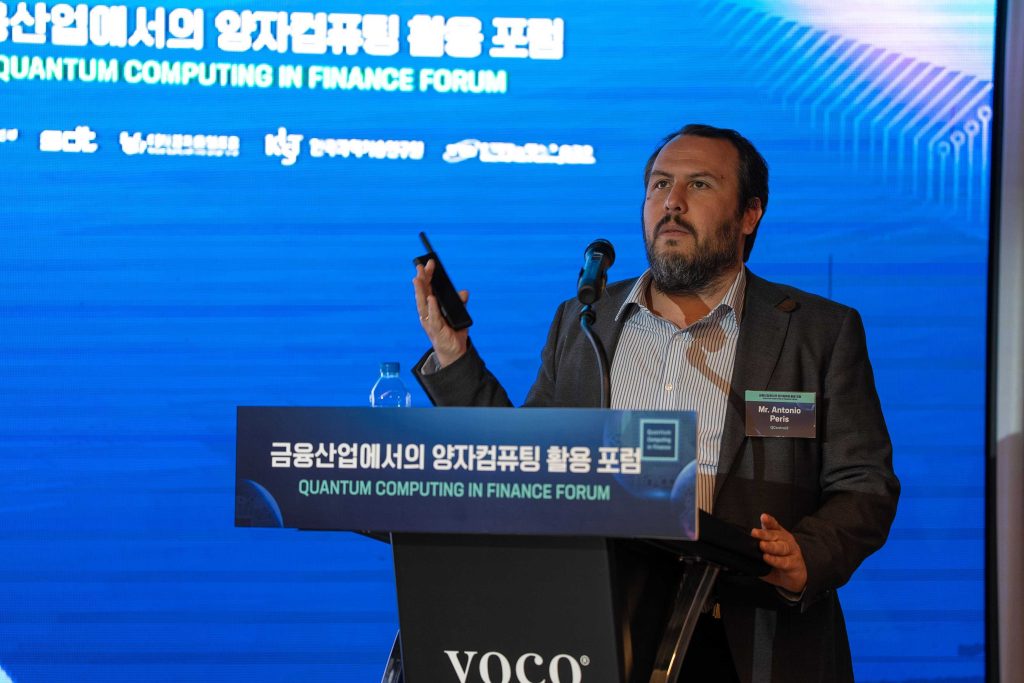
Antonio Peres, Quantum computing in finance, Seoul's Quantum Finance Forum

Key Insights from the Forum:

  • Quantum is Moving to Practice: Leading financial institutions like JPMorgan Chase and HSBC are not just exploring theory. They’re actively piloting quantum solutions for complex risk modeling and portfolio optimization. This signals a clear shift: quantum is becoming a tool for today, not just tomorrow.
  • Addressing Real-World Financial Challenges: Discussions highlighted quantum’s potential to tackle previously intractable problems in finance. Think more accurate fraud detection, hyper-personalized financial products, and significantly faster trade settlements. The impact? Enhanced efficiency, reduced risk, and new revenue streams.
  • Cross-Sector Collaboration is Key: The strong presence of finance leaders, IT experts, researchers, and policymakers underscored a vital point: building a robust quantum ecosystem requires diverse expertise and shared learning. This collaborative spirit is crucial for accelerating adoption and navigating the complexities of this new frontier.

Korea’s Quantum Leap – The Opportunity:

  • Strategic Advantage: Korea’s focused approach to quantum, backed by government initiatives and dynamic domestic champions like SDT Inc., offers a unique opportunity. By starting with a strategic vision, Korea can avoid early adopter pitfalls and build a highly competitive, quantum-ready financial sector.
  • Building Future-Proof Infrastructure: The discussions emphasized creating a foundational quantum infrastructure now. This means Korean industries can leapfrog older technologies, embedding quantum capabilities directly into their core operations for a lasting competitive edge.

QCentroid’s Role – Enabling Practical Quantum Adoption:

  • Learning from AI/ML’s Journey: The path to successful AI adoption taught us valuable lessons about the need for standardization, clear ROI demonstration, and user-friendly platforms. QCentroid applies these learnings, simplifying quantum access and integration, making it less of a research project and more of a business solution.
  • Orchestration is Non-Negotiable: As quantum hardware and algorithms diversify, an effective orchestration platform becomes essential. It allows businesses to benchmark different solutions, integrate with existing IT, and manage complex workflows. QCentroid provides this critical layer, ensuring enterprises can harness the best of quantum and keep track of breakneck technology progress.
  • Fostering Collaborative Ecosystems: Our platform is designed to support both private enterprise initiatives and broader collaborative projects, like those seen with @Moody’s or BIQAIN (Basque Quantum Hub). This flexibility helps accelerate innovation across the entire Korean quantum landscape.

A sincere thank you to the organizers – the Ministry of Science and ICT, SDT Inc., Future Quantum Convergence Forum (FQCF), KIST, and the Telecommunications Technology Association – for orchestrating such a pivotal event. Special appreciation to Natasha Kovacs for her outstanding efforts. It was also a pleasure to share the stage with experts and practitioners from JPMorgan Chase, HSBC, Deloitte, Opetek, ETRI, and @Yonsei University, and to engage with all the participants.

QCentroid is enthusiastic about contributing to Korea’s vibrant quantum future and quantum computing in finance. The potential for innovation and growth is immense, and we are ready to collaborate.
QuIC’s Recommendations for Europe’s Quantum Strategy: What It Means for Business (And Why You Should Care)

The European Quantum Industry Consortium (QuIC) has just published its recommendations for the EU’s Quantum Strategy, a document packed with insights, warnings, and, most importantly, opportunities. Carlos Kuchkovsky, CEO of QCentroid, has been one of the key contributors to this work, leveraging his experience as the former Head of Innovation at BBVA, as well as leading the work of the European Quantum Flagship on benchmarking and standardization. As he puts it in the recommendations, addressing organizations across Europe:

The challenge isn’t whether Quantum Computing will be relevant, but how fast companies can adapt.

But before you assume this is just another policy paper, slow down and take a look at our breakdown because details matter at this time. If you’re leading a company in finance, healthcare, logistics, or any data-heavy industry, what happens in quantum doesn’t stay in quantum. It’s about to change the way you do business.

Key Takeaways from the QuIC Report: What Matters for Business?

1. QuIC Recommends Europe Build Its Own Full-Stack Quantum Computer (Because Who Likes Dependencies?)

QuIC advises Europe to push for a “Made in Europe” quantum stack—hardware, software, and everything in between. The goal? Less reliance on non-European tech, more strategic independence.

Why you should care: Right now, quantum computing breakthroughs often come from the US, China, or Australia, for example. A strong European ecosystem means local businesses get better access, potentially with government-backed incentives. If you’re in an industry that needs high-powered computation (finance, logistics, pharmaceuticals), this is good news.

2. A Stronger Quantum Supply Chain (So We Don’t Have Another Chip Crisis, But With Qubits)

QuIC stresses the need for Europe to strengthen its quantum supply chain—funding research, securing raw materials, and creating a resilient network.

Why you should care: A stable supply chain means fewer bottlenecks when your business is ready to experiment with quantum solutions. It also means better pricing and competitive access to quantum hardware, reducing reliance on non-EU providers.

3. Making Europe a Quantum Investment Hotspot (Translation: Money Talks, Let’s Keep It Here)

QuIC’s recommendation? More incentives, better funding models, and smoother regulations to make Europe a more attractive place for quantum startups and investors.

Why you should care: If you’re considering dipping your toes into quantum, either through partnerships or direct investment, Europe is working on making it easier and more lucrative. Expect more accelerators, funding pools, and potential tax benefits.

4. Quantum Standards & Benchmarks (Because Right Now, It’s a Bit of a Wild West)

Quantum computing today is like the early days of AI—everyone’s hyped, but there’s little standardization. Europe wants to lead the way in setting benchmarks for performance, security, and interoperability.

Why you should care: If your company is considering quantum tech, clear standards will help you compare solutions apples-to-apples rather than trying to decode marketing jargon from different vendors. It also makes integration with existing IT infrastructure smoother. An insider tip: you can already compare many of the quantum solutions from various providers head-to-head with the QCentroid platform. 

5. Turning Intellectual Property into Revenue (Instead of Just Cool Science)

Europe has world-class quantum research but has historically lagged in commercialization. The strategy aims to change that by improving how quantum intellectual property (IP) is protected and monetized. QuIC recommends that Europe focus on better protecting and commercializing quantum intellectual property.

Why you should care: More structured IP policies mean that investing in quantum won’t just be for big tech players. Mid-sized enterprises and even non-tech companies can find commercial angles, whether through licensing, collaborations, or applied research projects.

6. Building a Quantum Workforce (Because Someone Has to Understand This Stuff)

QuIC calls for major investment in education, training, and reskilling initiatives to ensure Europe has enough quantum-literate professionals—not just scientists, but also business leaders who know how to implement the tech.

Why you should care: Finding skilled quantum professionals today is like trying to hire blockchain developers in 2015—difficult and expensive. A structured workforce plan means better talent pipelines for businesses wanting to explore quantum applications.

7. Keeping European Quantum Independent (So We Don’t Have to Beg for Access Later)

Security is a major concern. QuIC emphasizes the need for European control over critical quantum technologies, especially cloud-based quantum services, whether in banking, defense, or healthcare.

Why you should care: If your business handles sensitive data, future EU regulations might favor quantum solutions developed and hosted within Europe. Getting ahead of compliance now could save you a lot of headaches later.

8. Quantum for Sustainability & Social Good (Not Just for Science Fiction Plots)

QuIC recommends that quantum support broader sustainability goals—both environmental and social. This includes promoting responsible innovation, supporting green quantum tech, and aligning with the UN Sustainable Development Goals.

Why you should care:  As ESG reporting gets more serious, quantum applications in climate modeling, sustainable supply chains, and green energy could unlock real efficiencies and regulatory advantages. Plus, inclusive frameworks mean a more diverse future talent pool—and better optics for your brand.


Final Thoughts: What Should Businesses Do Now?

  1. Start preparing for quantum computing. You don’t need a quantum team yet, but understanding potential applications in your industry will prepare you for the next step.
  2. Keep an eye on EU funding and incentives. There is money available to support early adoption.
  3. Consider partnerships. Why take all the risks and a budget hit going it alone? Join forces with one or more quantum teams at startups and vendors and share the burden. You help them advance, they help you get answers you need. 

If you’re curious about how quantum computing could impact your business, now is the time to start paying attention.

Want to dive deeper? Read the full QuIC recommendations here and book a demo with our team.

QCentroid at MWC 2025: Quantum Computing Moves from Curiosity to Strategy

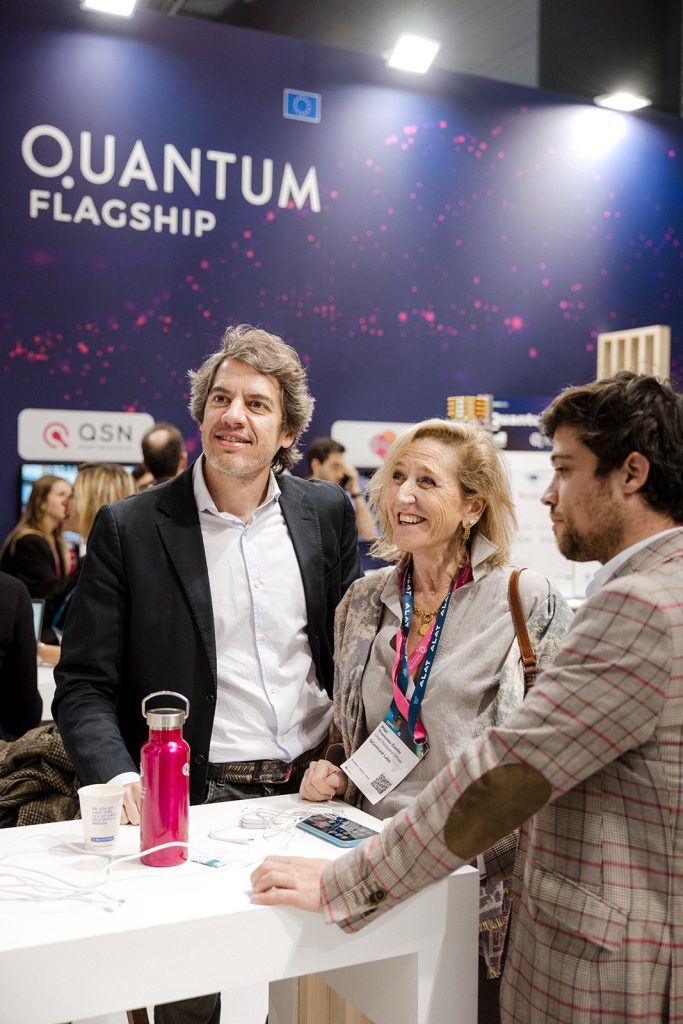
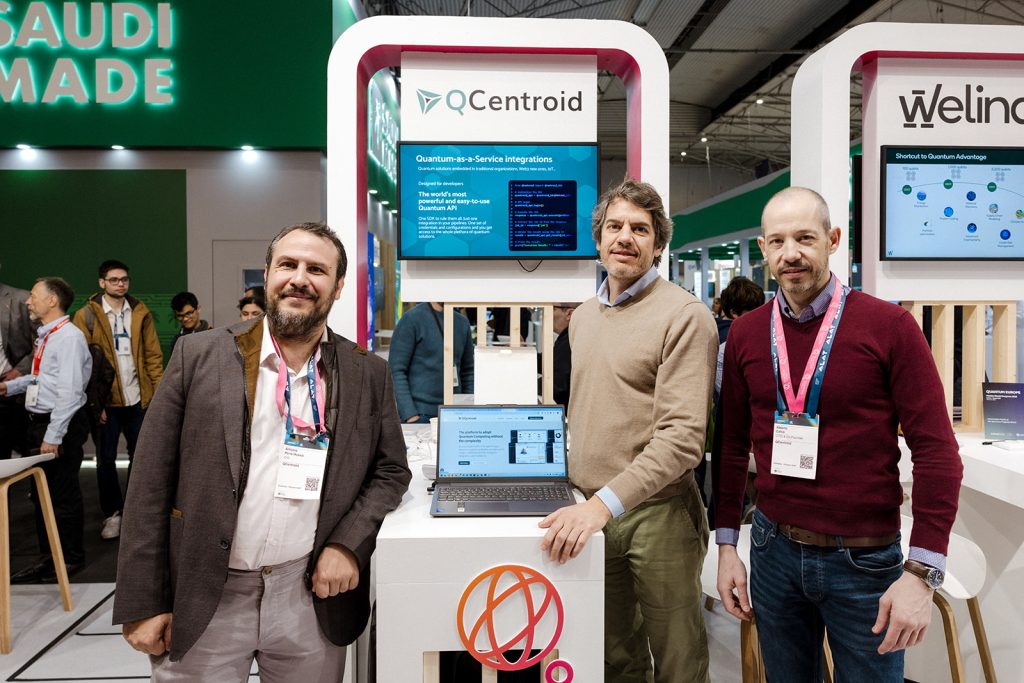
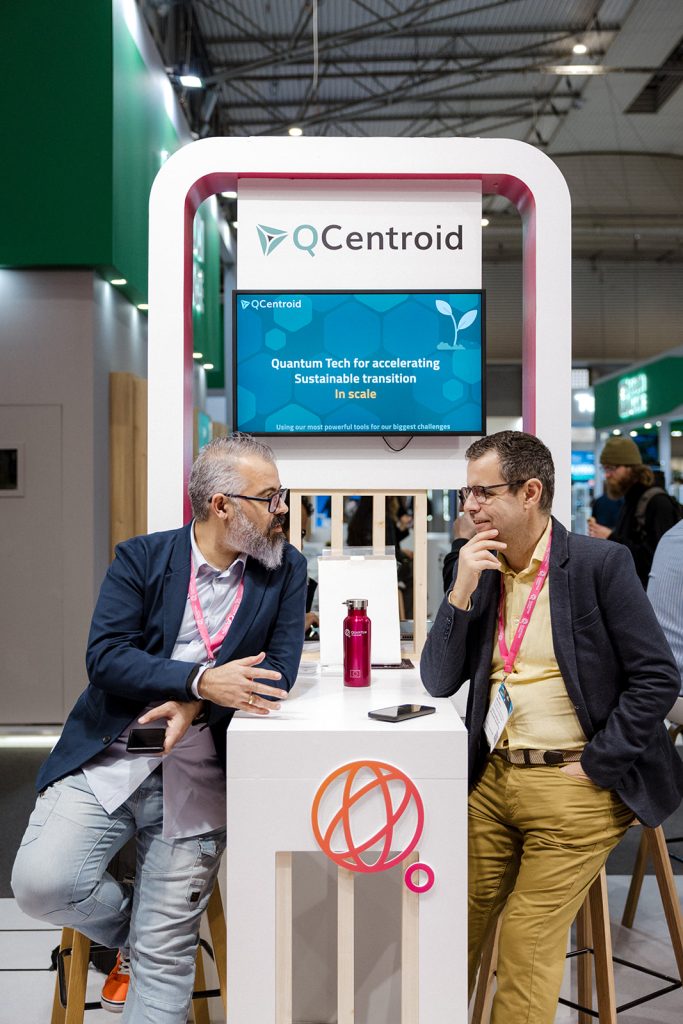
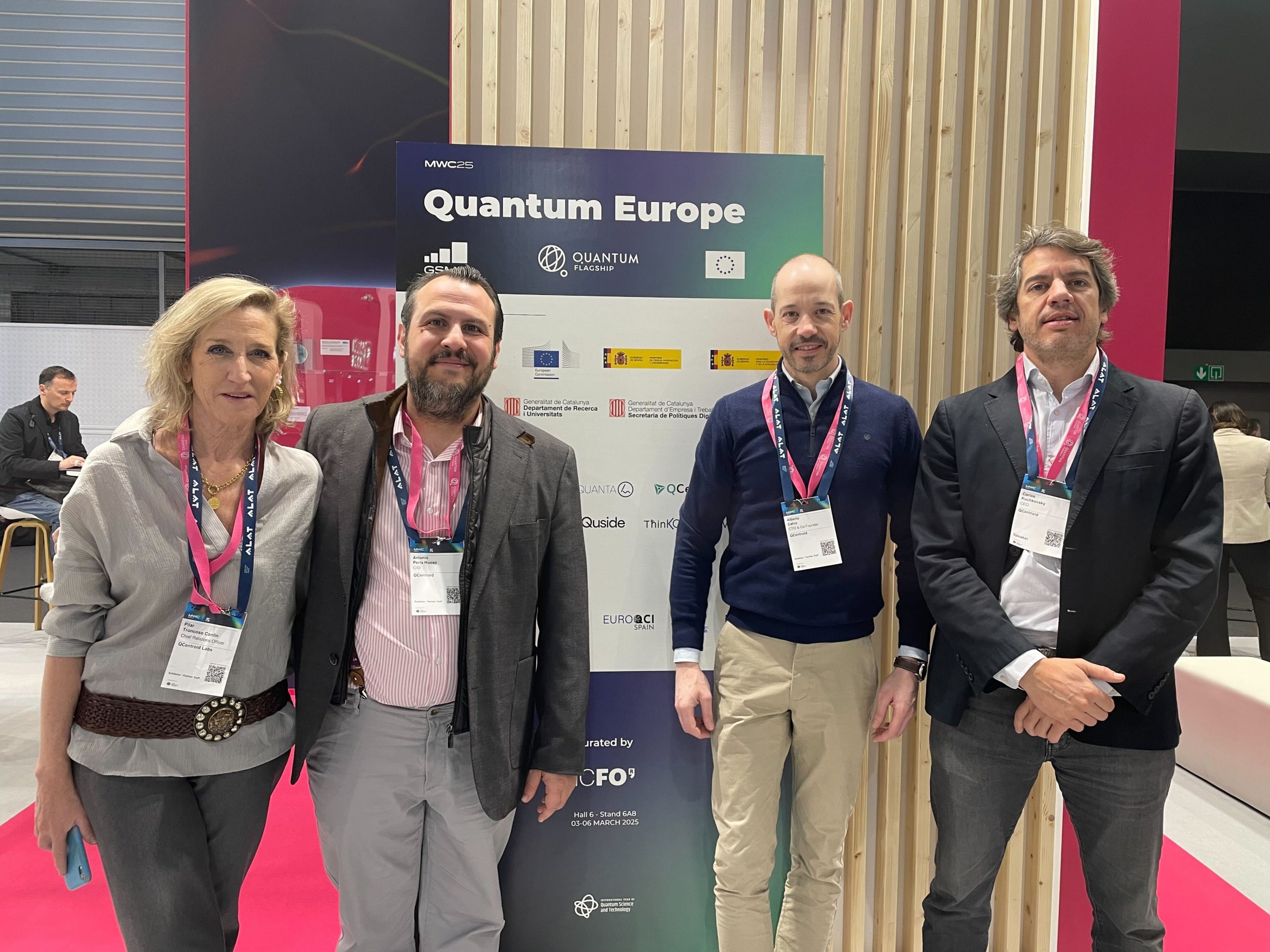
Pilar Troncoso, Antonio Peris, Alberto Calvo and Carlos Kuchkovsky at MWC 2025 Barcelona, Day 1

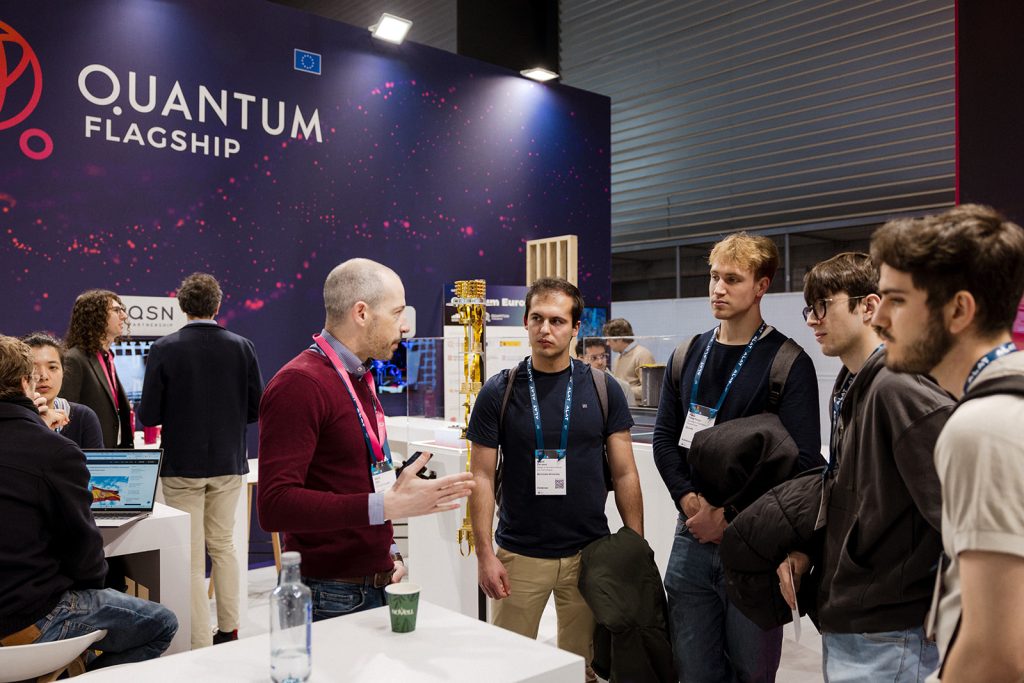
MWC Barcelona 2025 proved to be a pivotal moment for quantum technologies, with QCentroid at the forefront of transforming theoretical quantum concepts into practical business applications. Our team experienced four days of intense engagement, strategic partnerships, and real-time demonstrations that showcased how quantum computing is rapidly transitioning from speculative interest to concrete implementation strategies.

Day One: The Strategic Shift

The opening day at MWC25 demonstrated a marked evolution in how businesses approach quantum technologies. Conversations have notably shifted from exploratory curiosity to strategic planning, with corporations demonstrating sophisticated understanding of quantum’s potential business impact. Companies are now actively incorporating quantum solutions into their technology roadmaps rather than viewing them as distant possibilities.

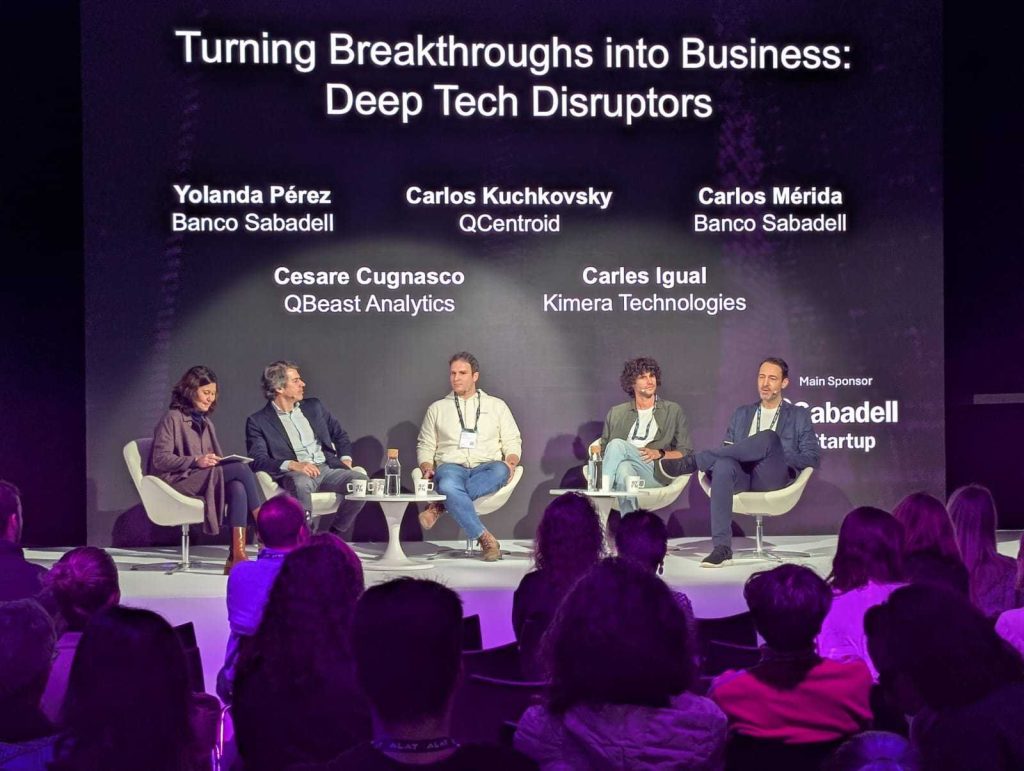
Our participation in Telefónica’s “Quantum Technologies and Public-Private Collaboration” session highlighted how strategic partnerships accelerate quantum adoption across industries. Simultaneously, our contribution to the startup session “Turning Breakthroughs into Business: Deep Tech Disruptors” explored the critical pathway from scientific innovation to market-ready solutions.

QUORUM: Making Quantum Happen Through Public-Private Power Moves

While showcasing our platform at MWC, we also advanced the QUORUM initiative—a CDTI-funded program quietly transforming Spain’s quantum ecosystem. Instead of just talking about quantum possibilities, QUORUM lets us actually build them.

At MWC, this meant getting practical:

  • Rolling out our integration solutions that connect quantum computing to real industrial challenges and energy transition needs
  • Putting quantum algorithms through their paces with actual benchmarking for sustainability use cases
  • Breaking down barriers to quantum access with our Quantum-as-a-Service (QaaS) approach that works for both businesses and public organizations

QUORUM isn’t just another government program – it’s our accelerator for turning quantum theories into tools that tackle sustainability, climate, and digital transformation challenges. No fluff, just results

Day Two: Quantum at the Intersection of Public and Private Sectors

The second day centered on strengthening crucial relationships between quantum innovation and industrial strategy. Our partnership with Telefónica and the Bizkaia Provincial Council demonstrated how the QCentroid Platform serves as an essential bridge between advanced quantum computing capabilities and practical business applications.

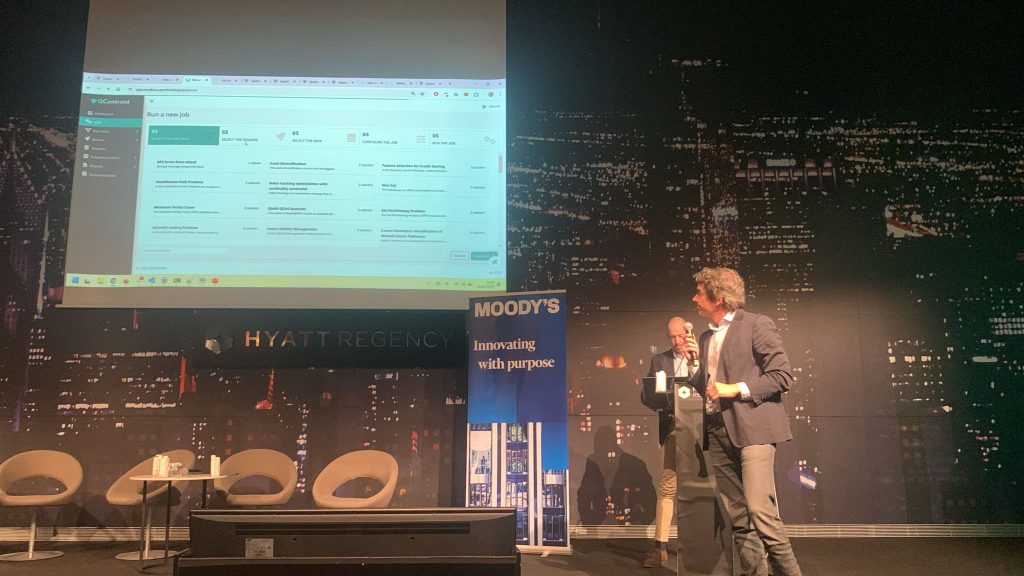
Our CEO, Carlos Kuchkovsky, joined industry leaders from Banco Sabadell, Kimera Technologies, and Qbeast to address the challenges deep tech founders face when transforming scientific breakthroughs into viable business models. The evening concluded with an exclusive preview of our AI capabilities at the CMS and Moody’s event, setting the stage for our upcoming major announcement.

Day Three: Demonstrating Real-World Quantum Applications

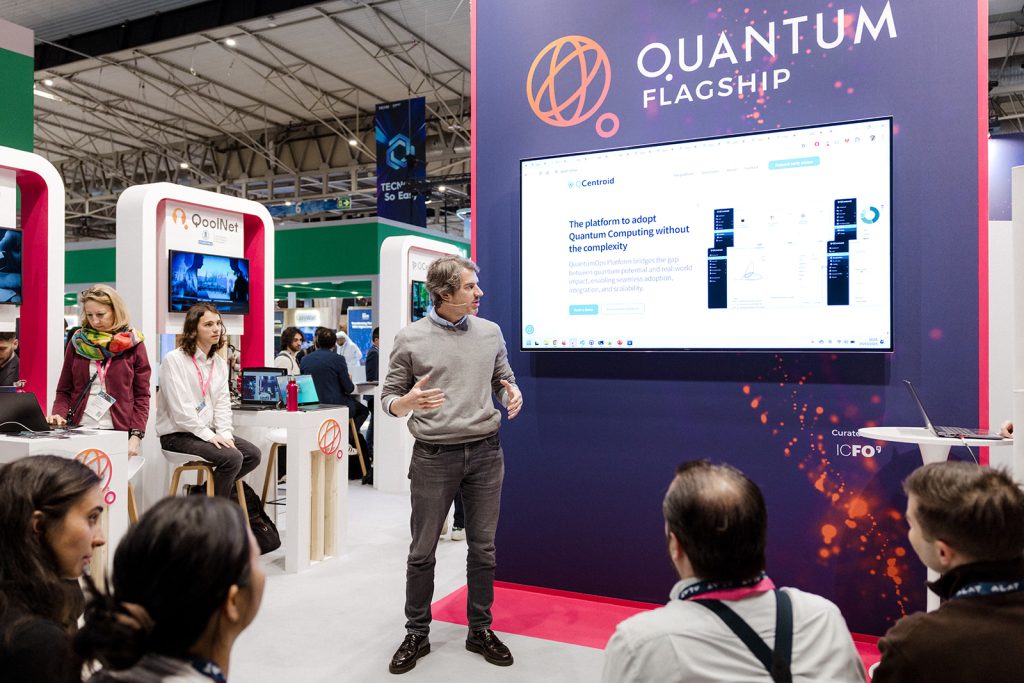
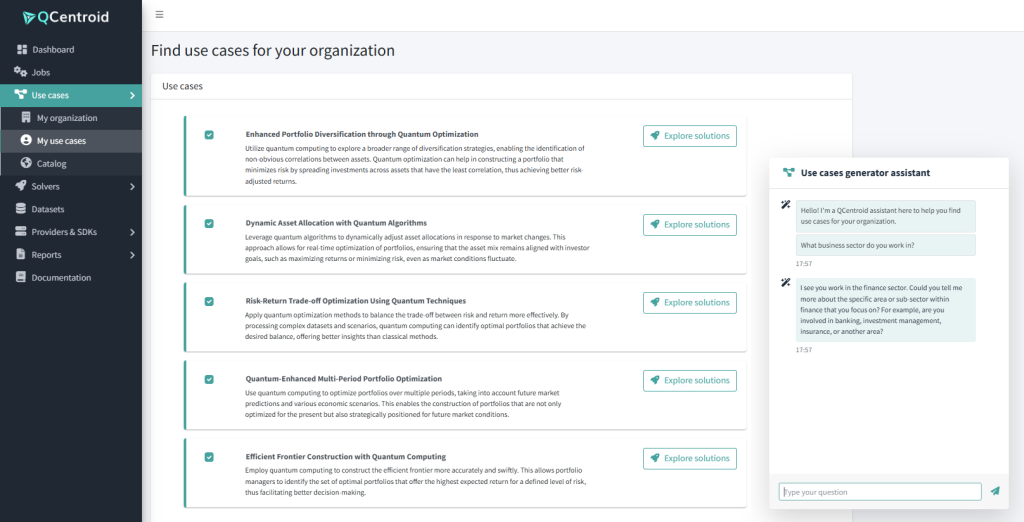
Day three elevated our presence from discussion to demonstration. Rather than presenting theoretical concepts, we conducted a live demonstration of our AI assistant at the Quantum Flagship stage. This interactive session invited audience participation, with attendees suggesting industry challenges for real-time quantum use case identification.

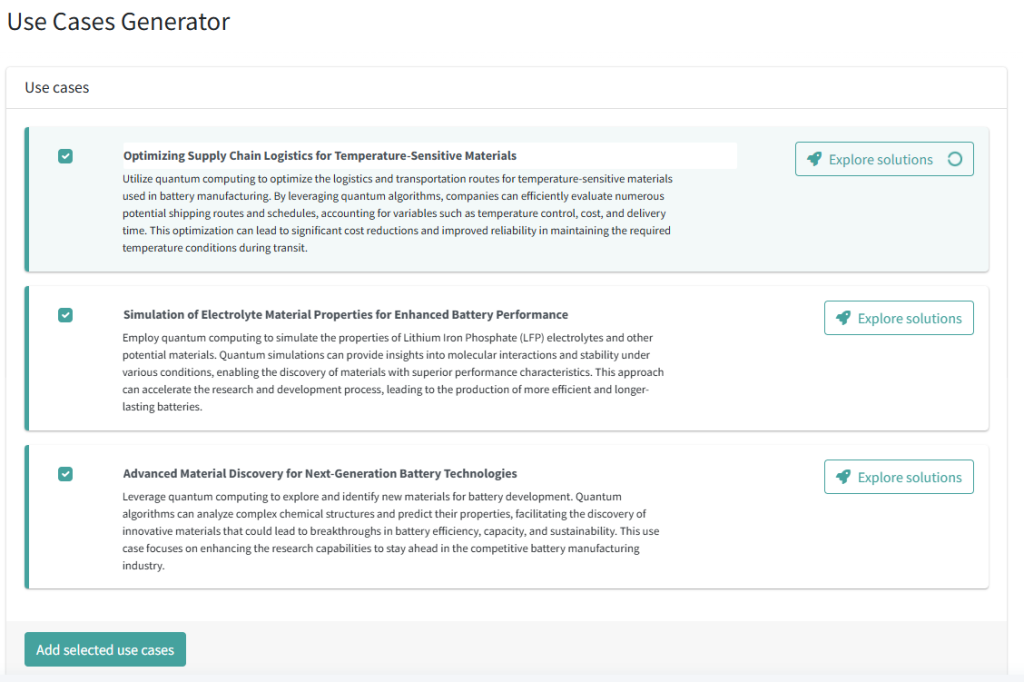
When an audience member proposed “batteries manufacturing” as a test case, our AI assistant immediately generated relevant applications for materials research and catalyzers. This practical demonstration illustrated how quantum-powered AI can deliver immediate value across sectors—emphasizing results over promises.

The Quantum Flagship event drew an impressive cross-section of stakeholders, from public officials and economists to industry leaders and companies exploring quantum integration. Concurrently, we unveiled customized features for Bank Sabadell’s committee, further demonstrating our commitment to developing sector-specific quantum solutions.

Day Four: Engaging the Next Generation of Quantum Talent

The final day brought a fresh perspective as university students visited our quantum technologies spaces. These interactions provided valuable insights for our upcoming developer tools while reinforcing the importance of nurturing young talent in the quantum ecosystem.

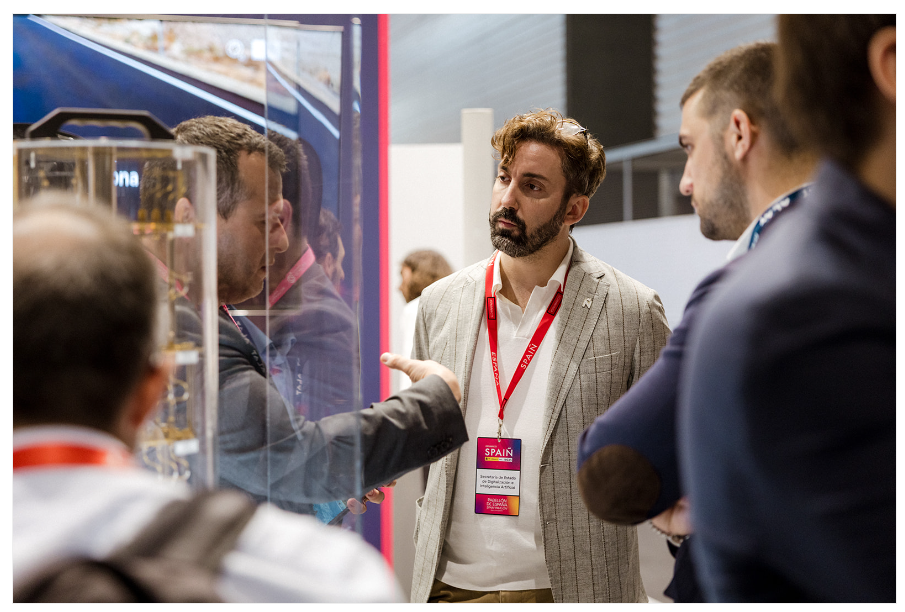
A visit from the Secretaría de Estado de Digitalización e Inteligencia Artificial (SEDIA) highlighted the critical role of public-private collaboration in advancing quantum initiatives. This governmental engagement underscores the strategic importance of quantum technologies at the national level.

Looking Forward: From Exploration to Implementation

As MWC Barcelona 2025 concluded, one thing became abundantly clear: Quantum computing has moved beyond theoretical discussions and entered the phase of practical implementation. Businesses are no longer asking “if” quantum will impact their operations but “how” and “when” to integrate quantum advantages into their strategic planning.

QCentroid stands ready to facilitate this transition, providing the expertise and platform capabilities needed to transform quantum potential into business reality. The connections established and demonstrations conducted at MWC25 have positioned us to accelerate quantum adoption across industries in the coming year.

The quantum future isn’t just approaching—it’s here, and it’s time for businesses to take action. Schedule a call with us, and let’s move together.

QCentroid Announces the Quantum Computing Readiness Assessment Tool at MWC

QCentroid Announces the Quantum Computing Readiness Assessment Tool at MWC

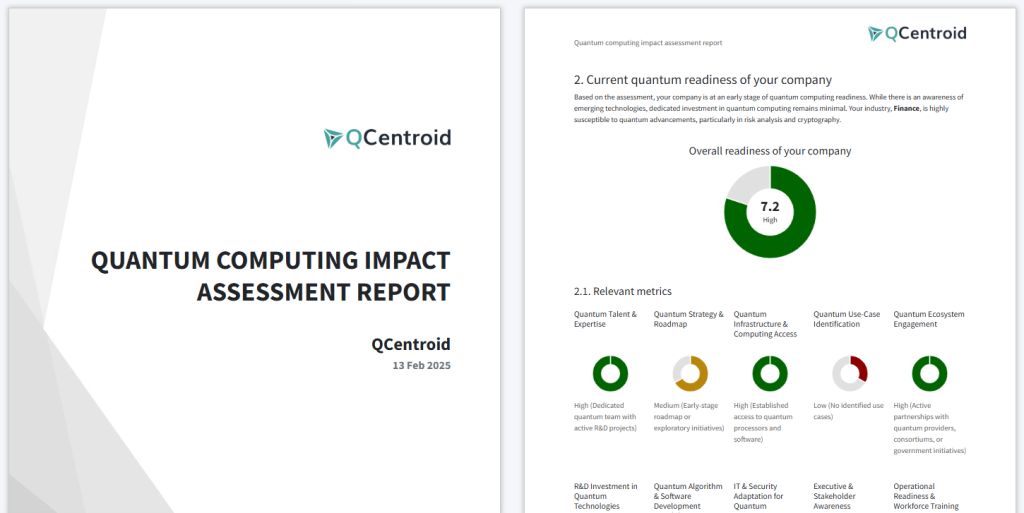
QCentroid is excited to unveil our Quantum Computing Readiness Assessment Tool at this year’s Mobile World Congress (MWC). As quantum computing progresses, businesses across various industries seek to understand how to utilize this groundbreaking technology. Our new tool is designed to provide companies with a clear and actionable assessment of their readiness to adopt quantum computing solutions.

The Quantum Computing Readiness Assessment Tool is an intuitive, data-driven platform that enables organizations to assess their current capabilities, identify key areas for development, and receive tailored recommendations on how to integrate quantum computing into their operations. Whether your company is new to quantum technology or already exploring potential applications, this tool will provide valuable insights to help you take the next steps toward quantum adoption.

In addition to this tool, QCentroid is also introducing two other powerful resources that are included in the QCentroid Platform to help businesses navigate the quantum landscape.

The Use Cases and Strategy Generator helps companies identify the most relevant quantum computing applications for their industry and build a roadmap for adoption.

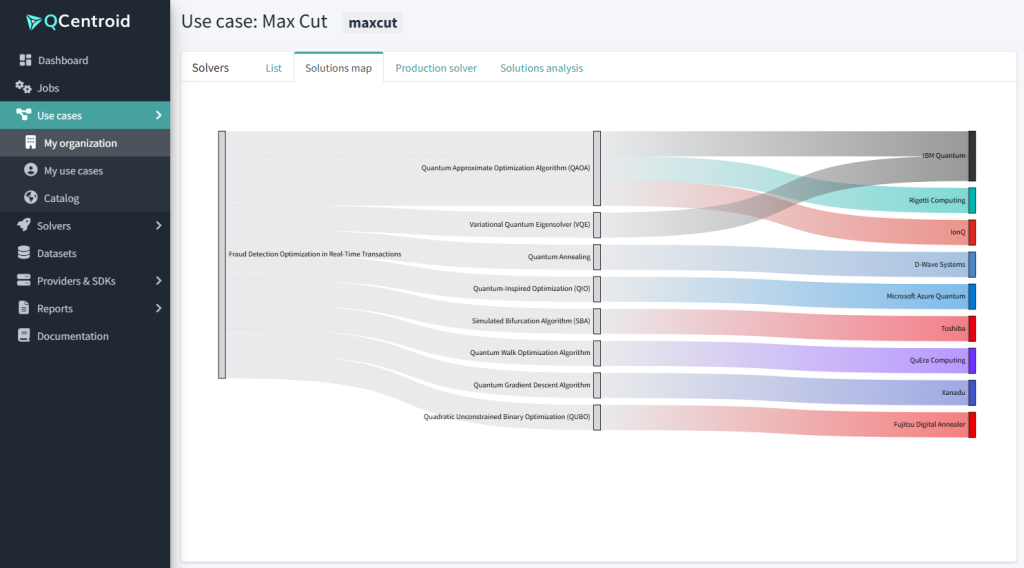
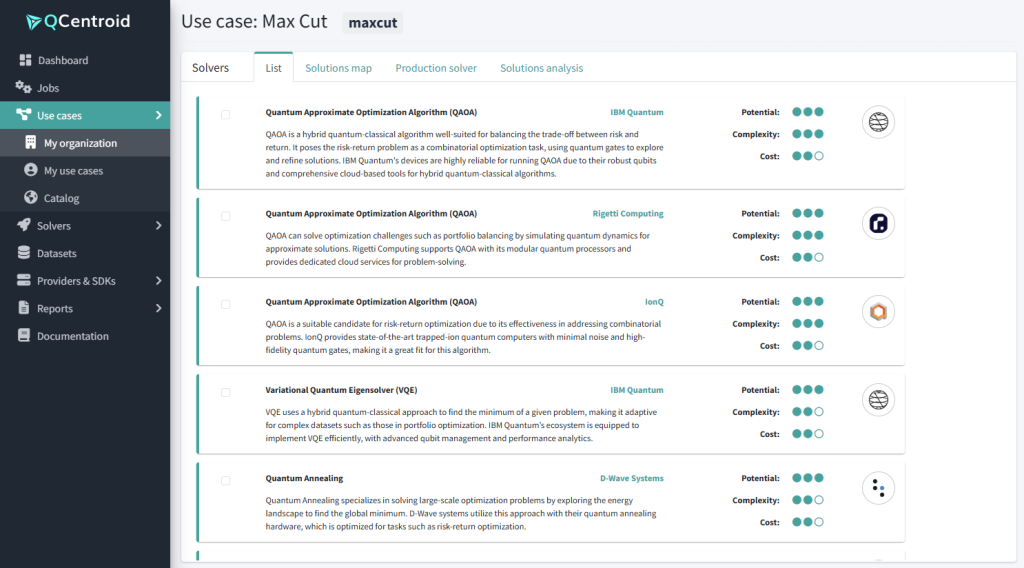
And the Use Cases Solutions Explorer, designed to provide an in-depth analysis of real-world quantum solutions, helping businesses understand how quantum computing can solve their specific challenges.

At MWC, visitors will have the opportunity to see a preview of these tools in action, interact with our experts, and learn how quantum computing can enhance business strategies, optimize complex processes, and unlock new opportunities. Our team will be available to discuss industry-specific use cases and how QCentroid’s solutions can help businesses navigate the quantum revolution.

We invite all attendees to visit our stand at MWC to explore the Quantum Computing Readiness Assessment Tool firsthand. Don’t miss this chance to evaluate your company’s quantum potential and discover how QCentroid can support your journey into the future of computing.

Join us at MWC and take the first step toward quantum advantage!

Quantum and advanced computing OPs cycle. A framework for QAC adoption and integration

Quantum Computing is no longer a futuristic concept —it’s here, and it’s reshaping industries. But for many organizations, the path to integrating quantum into their operations is riddled with challenges. The journey is far from straightforward, from navigating the steep learning curve to aligning quantum efforts with tangible business outcomes.

This is where QCentroid’s QuantumOps Platform comes into play. Positioned as a bridge between quantum potential and real-world impact, the platform is designed to help enterprises easily and efficiently navigate the Quantum and Advanced Computing Operational Cycle (QAC-Ops). With its suite of tools and services, QCentroid empowers organizations to embrace quantum computing without the complexity, ensuring a seamless transition into this transformative era.

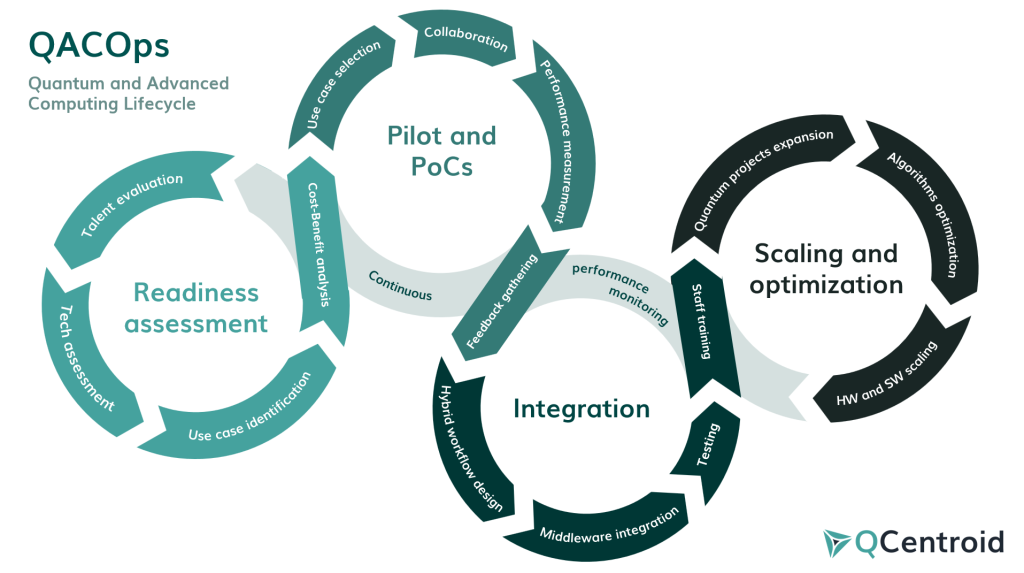
QAC-Ops cycle visualization

Challenges in Quantum Computing Adoption

Quantum computing operates on principles fundamentally different from classical systems. Its unique ability to process complex computations opens up opportunities in fields like logistics optimization, portfolio management, and drug discovery. However, this potential is often locked behind a wall of technical challenges.

Enterprises frequently struggle with three main hurdles: identifying meaningful use cases, integrating quantum workflows with existing classical systems, and scaling solutions to deliver measurable ROI. These obstacles often deter organizations from fully committing to quantum adoption, leaving them unsure where to start.

How QCentroid Makes the Difference

QCentroid simplifies the quantum adoption journey by providing an end-to-end platform that addresses every phase of the QAC-Ops cycle. Starting with readiness assessment, the platform helps organizations evaluate their current capabilities, resources, and alignment with quantum opportunities. Its intuitive tools guide users in identifying high-value use cases tailored to their specific industry needs.

With the QCentroid platform Roadmap Visualization and Prioritization tool, organizations can create, prioritize, and visualize all the relevant use cases in their industry, classified by different metrics such as business impact, complexity, or impact on energy consumption. This helps to have a visual map and a more clear understanding of where to direct the efforts during the whole process.

When it comes to experimentation, QCentroid platform supports enterprises in running pilot projects and proofs of concept (PoCs), offering a user-friendly interface and an integrated and cloud-hosted development environment for developing and testing quantum algorithms. Businesses can experiment with quantum solutions confidently, knowing they’re supported by a robust, scalable environment that minimizes risks and accelerates results. Also, during this initial phase, the built-in Synthetic Data Generation tool allows organizations to start experimenting without compromising data security and privacy, focusing on evaluating the algorithms and the hardware options.

During this phase, the Experiment Tracking and Benchmarking tool analyses every job run and provides all the necessary information and insights of the PoCs in a meaningful way through comprehensible charts and data tables, to help decide which combination of technologies works best for each use case.

Bridging the Classical-Quantum Divide

Or How to Integrate Quantum and Classical Systems Seamlessly

One of the biggest pain points in quantum adoption is integration—how do you make quantum systems work with your existing IT infrastructure? QCentroid addresses this challenge with its powerful APIs and SDKs that enable seamless interaction between classical and quantum systems. Each algorithm implemented in the platform is automatically assigned an API endpoint, making integrations quicker and more efficient. Additionally, through the Production Solver Selection tool, the IT team can generate an all-in-one endpoint per use case and redirect it to the desired solver with one click.

The platform is hardware-agnostic, providing access to leading quantum processors via the cloud. This flexibility ensures that businesses can explore multiple hardware options without vendor lock-in, optimizing for the best fit as technology evolves. Furthermore, QCentroid’s workflow orchestration tools ensure smooth data exchange between classical and quantum components, creating a hybrid environment where both technologies complement each other effectively.

But, of course, all this is not limited to Quantum Computing. Any other Advanced Computing techniques and providers are constantly being incorporated into the platform, so your organization always has access to the best combination of hardware and software.

Scaling Made Simple

Once the foundational work is done, scaling quantum solutions becomes the focus. QCentroid’s platform is equipped with Advanced Monitoring and Analytics tools to optimize performance at scale. Real-time insights into algorithm efficiency and hardware utilization help enterprises fine-tune their operations, ensuring quantum projects deliver maximum value.

Moreover, the platform supports collaborative features, enabling teams to work efficiently across departments or even with external quantum experts. This collaborative approach fosters innovation and accelerates the time-to-market for quantum-driven solutions.

Continuous Evolution with the Feedback Loop

Quantum computing is a rapidly evolving field, and staying ahead means embracing change. QCentroid’s platform is designed with this in mind, supporting iterative learning and continuous improvement. Built-in feedback mechanisms allow organizations to refine their strategies based on real-world outcomes, integrating the latest advancements in quantum technologies as they emerge.

This adaptability ensures businesses remain at the forefront of quantum innovation, leveraging early wins to build momentum and drive long-term success.

At this point again, the Production Solver Selection tool allows quick railroad switch to a better solution as they emerge during the cycle in the experimentation and benchmarking phases.

Why QCentroid?

QCentroid doesn’t just offer tools, not even an all-in-one platform; it offers a vision—a future where quantum and advanced computing becomes an accessible and integral part of enterprise operations. The platform’s ability to simplify the QAC-Ops cycle, from readiness to scaling and optimization, positions it as a trusted partner for organizations aiming to unlock quantum’s transformative potential.

By removing barriers and providing a cohesive framework, QCentroid enables companies to focus on what matters most: solving complex problems, driving innovation, and staying competitive in an increasingly quantum-driven world.

Ready to embark on your quantum journey? Learn how QCentroid’s QuantumOps Platform can help your organization bridge the gap between quantum potential and real-world impact by visiting our Quantum as a Service page. Let’s make the quantum future a reality—together.

Quantum Computing OPs cycle. A framework for QC adoption and integration

Quantum Computing is no longer a futuristic concept —it’s here, and it’s reshaping industries. But for many organizations, the path to integrating quantum into their operations is riddled with challenges. The journey is far from straightforward, from navigating the steep learning curve to aligning quantum efforts with tangible business outcomes.

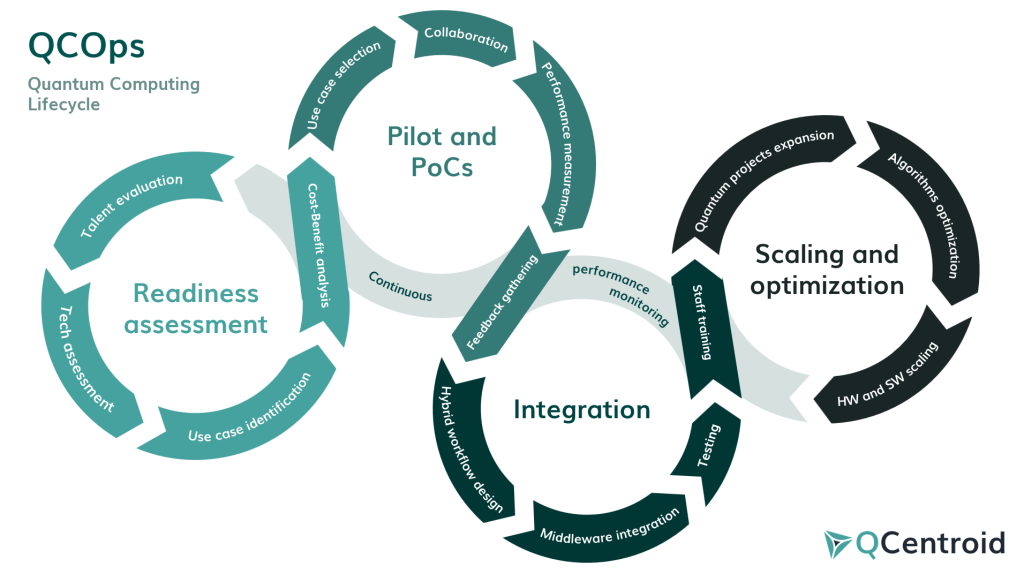
This is where QCentroid’s QuantumOps Platform comes into play. Positioned as a bridge between quantum potential and real-world impact, the platform is designed to help enterprises easily and efficiently navigate the Quantum Computing Operational Cycle (QC-Ops). With its suite of tools and services, QCentroid empowers organizations to embrace quantum computing without the complexity, ensuring a seamless transition into this transformative era.

Challenges in Quantum Computing Adoption

Quantum computing operates on principles fundamentally different from classical systems. Its unique ability to process complex computations opens up opportunities in fields like logistics optimization, portfolio management, and drug discovery. However, this potential is often locked behind a wall of technical challenges.

Enterprises frequently struggle with three main hurdles: identifying meaningful use cases, integrating quantum workflows with existing classical systems, and scaling solutions to deliver measurable ROI. These obstacles often deter organizations from fully committing to quantum adoption, leaving them unsure where to start.

How QCentroid Makes the Difference

QCentroid simplifies the quantum adoption journey by providing an end-to-end platform that addresses every phase of the QAC-Ops cycle. Starting with readiness assessment, the platform helps organizations evaluate their current capabilities, resources, and alignment with quantum opportunities. Its intuitive tools guide users in identifying high-value use cases tailored to their specific industry needs.

With the QCentroid platform Roadmap Visualization and Prioritization tool, organizations can create, prioritize, and visualize all the relevant use cases in their industry, classified by different metrics such as business impact, complexity, or impact on energy consumption. This helps to have a visual map and a more clear understanding of where to direct the efforts during the whole process.

When it comes to experimentation, QCentroid platform supports enterprises in running pilot projects and proofs of concept (PoCs), offering a user-friendly interface and an integrated and cloud-hosted development environment for developing and testing quantum algorithms. Businesses can experiment with quantum solutions confidently, knowing they’re supported by a robust, scalable environment that minimizes risks and accelerates results. Also, during this initial phase, the built-in Synthetic Data Generation tool allows organizations to start experimenting without compromising data security and privacy, focusing on evaluating the algorithms and the hardware options.

During this phase, the Experiment Tracking and Benchmarking tool analyses every job run and provides all the necessary information and insights of the PoCs in a meaningful way through comprehensible charts and data tables, to help decide which combination of technologies works best for each use case.

Bridging the Classical-Quantum Divide

Or How to Integrate Quantum and Classical Systems Seamlessly

One of the biggest pain points in quantum adoption is integration—how do you make quantum systems work with your existing IT infrastructure? QCentroid addresses this challenge with its powerful APIs and SDKs that enable seamless interaction between classical and quantum systems. Each algorithm implemented in the platform is automatically assigned an API endpoint, making integrations quicker and more efficient. Additionally, through the Production Solver Selection tool, the IT team can generate an all-in-one endpoint per use case and redirect it to the desired solver with one click.

The platform is hardware-agnostic, providing access to leading quantum processors via the cloud. This flexibility ensures that businesses can explore multiple hardware options without vendor lock-in, optimizing for the best fit as technology evolves. Furthermore, QCentroid’s workflow orchestration tools ensure smooth data exchange between classical and quantum components, creating a hybrid environment where both technologies complement each other effectively.

But, all this is not limited to Quantum Computing. Other Advanced Computing techniques and providers are also being incorporated into the platform, so your organization always has access to the best combination of hardware and software.

Scaling Made Simple

Once the foundational work is done, scaling quantum solutions becomes the focus. QCentroid’s platform is equipped with Advanced Monitoring and Analytics tools to optimize performance at scale. Real-time insights into algorithm efficiency and hardware utilization help enterprises fine-tune their operations, ensuring quantum projects deliver maximum value.

Moreover, the platform supports collaborative features, enabling teams to work efficiently across departments or even with external quantum experts. This collaborative approach fosters innovation and accelerates the time-to-market for quantum-driven solutions.

Continuous Evolution with the Feedback Loop

Quantum computing is a rapidly evolving field, and staying ahead means embracing change. QCentroid’s platform is designed with this in mind, supporting iterative learning and continuous improvement. Built-in feedback mechanisms allow organizations to refine their strategies based on real-world outcomes, integrating the latest advancements in quantum technologies as they emerge.

This adaptability ensures businesses remain at the forefront of quantum innovation, leveraging early wins to build momentum and drive long-term success.

At this point again, the Production Solver Selection tool allows quick railroad switch to a better solution as they emerge during the cycle in the experimentation and benchmarking phases.

Why QCentroid?

QCentroid doesn’t just offer tools, not even an all-in-one platform; it offers a vision—a future where quantum computing becomes an accessible and integral part of enterprise operations. The platform’s ability to simplify the QC-Ops cycle, from readiness to scaling and optimization, positions it as a trusted partner for organizations aiming to unlock quantum’s transformative potential.

By removing barriers and providing a cohesive framework, QCentroid enables companies to focus on what matters most: solving complex problems, driving innovation, and staying competitive in an increasingly quantum-driven world.

Ready to embark on your quantum journey? Learn how QCentroid’s QuantumOps Platform can help your organization bridge the gap between quantum potential and real-world impact by visiting our Quantum as a Service page. Let’s make the quantum future a reality—together.

Quantum Computing: Trends and Challenges to Watch in 2025

Trends and Challenges to Watch in 2025

Quantum Computing, AI, and Cybersecurity

As we close the chapter on 2024 and its remarkable quantum breakthroughs, it’s time to focus on the trends and challenges shaping the quantum computing landscape this year. 

In 2025, the focus will shift from exploring theoretical possibilities to demonstrating tangible business value, known as quantum utility, in real-world applications. The latter would likely be achieved with specialized application-specific hardware and software and hybrid classical-AI-quantum computations. 

Focus on Quantum Utility

The emphasis will shift further from “quantum supremacy” (demonstrating that a quantum computer can perform a task that is intractable for classical computers) to “quantum utility” (solving real-world problems that provide business value). More companies will claim quantum utility for specific use cases. This is the key theme for 2025 that explains the other trends.

Hybrid Quantum-Classical Computing

While full-scale quantum computers are still some time away, the trend of combining classical and quantum computing resources will continue to grow. This involves using classical computers to handle certain computation parts while offloading computationally intensive tasks to quantum processors. This trend will lead to the rise of the hybrid quantum-classical-AI offerings by the data centers and the cloud computing providers, as well as the on-premise quantum systems installation, with companies focusing on solving integration challenges and adapting algorithms to these hybrid workflows.

Specialized Quantum Hardware 

Instead of pursuing universal, gate-based quantum computers, which face significant technological hurdles, some companies, such as D-Wave and Kipu Quantum, are developing specialized quantum hardware tailored for specific problem types. These specialized systems, such as analog quantum computers and hybrid analog-digital systems, may offer a faster path to solving commercially relevant problems, even if they are less versatile than general-purpose quantum computers.

Increased Investments and Growing Public Interest

In 2025, we can expect a surge in both private and public investment in quantum computing as qubit counts increase, error rates decrease, and qubit connectivity improves. The approaching prospect of quantum utility, even in niche applications, is attracting the attention of early adopters across various industries.  

  • A McKinsey report suggests that up to $80 billion could be invested in quantum technologies by the end of the 2030s.
  • The number of scientific publications and patent filings related to quantum computing continues to rise exponentially.
  • A Gartner report suggests that more than 40% of large enterprises will have quantum computing initiatives in place by 2025. This number was around 1% in 2023.

More Regulation and Control

As the technology starts to show early promise, governments worldwide are likely to introduce or further work on more detailed technology standards, investment or public funding regulations, and export controls, aiming to capture the future value generated by the technology at the national or regional level, with an initial focus on defense use cases.  

Challenges facing players in this field

Quantum computing’s potential is undeniable, but the path to widespread adoption is filled with challenges. Addressing these will define the industry’s trajectory in 2025.

Scalability

Scaling quantum computers to the size required for real-world applications presents a formidable engineering challenge. Not only must the number of qubits increase dramatically from the current range of a few hundred to potentially millions of logical qubits, but these qubits must also maintain high quality (low error rates, long coherence times) and be interconnected in complex ways. Maintaining coherence and managing inter-qubit interactions becomes exponentially more difficult as the system grows.

Error Correction

Achieving fault-tolerant quantum computation, which involves robust and efficient error correction, is essential for practical quantum computing but remains a long-term goal. Current error rates per logical operation, approximately 10-3, are far too high and need to be reduced by at least ten orders of magnitude for fault tolerance. This will enable complex quantum algorithms to run for extended periods without errors corrupting the computation.

Cost

Quantum computing is currently 100,000 times more expensive than classical computing ($1,000 to $5,000 per hour for quantum machines compared with $0.05 per hour for classical computing). Reducing costs is essential for broader adoption. Reducing these costs is essential for the wider adoption and commercialization of quantum computing.

Algorithm Development

The development of quantum algorithms that demonstrate a clear and substantial advantage over classical algorithms is still in its early stages. While a few algorithms, such as Shor’s and Grover’s, have shown great potential, more research is urgently needed to discover and develop quantum algorithms tailored to specific applications across various industries, including materials science, pharmaceuticals, finance, and artifфбicial intelligence.

Software and Programming

Programming quantum computers is fundamentally different from classical programming. Developing user-friendly software tools, platforms, and programming languages is crucial for making quantum computing accessible to a wider range of developers and future enterprise users.

Talent Gap

And the last, but as important as the first one – there is a shortage of skilled professionals with expertise in quantum computing, physics, engineering, and software development. Universities and training programs are expanding their quantum education offerings, but the demand for skilled individuals currently outpaces the supply, making interdisciplinary collaboration and attracting talent from related fields essential. To address this, initiatives like the Open Quantum Institute, hosted at CERN, aim to grow a new generation of quantum experts focusing on underserved geographies.

The challenges facing quantum computing are significant, but so are the rewards for those who address them proactively. If your organization is ready to lead in this new era of quantum innovation, now is the time to act. Contact our team today to discuss how we can help you navigate these challenges and build a roadmap to quantum readiness. Together, we can turn obstacles into opportunities.

QCentroid and Innsomnia partner to bring quantum computing closer to its ecosystem

QCentroid, a leader in quantum computing solutions, has entered into a strategic partnership with Innsomnia, Spain’s premier innovation accelerator, to bring the transformative power of quantum technology to Innsomnia’s ecosystem of startups, scaleups, and corporate innovators. This collaboration will allow users to access QCentroid’s QuantumOps platform to solve complex problems faster, more efficiently, and at a lower cost—without requiring specialized quantum expertise.

Quantum computing is a cornerstone of Europe’s technological and economic future. A recent report by Mario Draghi, former President of the European Central Bank, highlights quantum technology as a key enabler of Europe’s competitiveness, with a projected €850 billion economic impact across the continent over the next two decades. In this context, QCentroid’s mission to democratize access to quantum computing is more vital than ever.

“Our partnership with Innsomnia underscores our commitment to making quantum computing an accessible and practical tool for solving real-world challenges,” said Pilar Troncoso, Chief Relations Officer of QCentroid. “Through this collaboration, we’re not only empowering innovators but also contributing to Europe’s position as a global leader in quantum technology.”

Innsomnia’s community will now be equipped to apply quantum computing in diverse fields, including process optimization, chemical simulations, machine learning model training, and beyond. These applications have the potential to drive breakthroughs in critical sectors such as eHealth, AgriTech, and FinTech.

The partnership was formalized by Pilar Troncoso and Francesc Pons, general manager of Innsomnia. Pons emphasized the importance of the collaboration: “By joining forces with QCentroid, we’re offering our ecosystem a unique opportunity to integrate quantum technology into their innovation processes. This is a decisive step in fostering disruptive solutions that can address complex challenges across industries.”

QCentroid’s QuantumOps platform stands out for its intuitive design, enabling businesses and researchers to utilize quantum algorithms and simulations without the steep learning curve traditionally associated with this cutting-edge field.

As part of its commitment to innovation, QCentroid is dedicated to creating an open quantum ecosystem where ideas flourish, and barriers to entry are minimized. This partnership with Innsomnia represents a significant milestone in achieving this vision, aligning with the shared goal of fostering technological advancement in Europe.

QCentroid Secured Neotec Funding

A little birdie told us we started the year strong… and they weren’t wrong. QCentroid has secured Neotec funding from CDTI Innovación – Centro para el Desarrollo Tecnológico y la Innovación. Neotec supports the creation of technology-based companies in Spain, and we’re incredibly proud to have been selected.

The inside scoop? Our application achieved the highest score of all applicants. This is a fantastic validation of our team’s success in bridging the gap between research and practical applications, empowering businesses to harness the power of quantum and next-gen computing for their products and services.

Big thanks to Neotec for their support of Spanish tech businesses. We can’t wait to show you what we will do with this!

Major Milestones in Quantum Computing in 2024

2024 was a landmark year for quantum computing. Quantum computers have again proven they can tackle impossible problems for even the most powerful supercomputers. With the rise of the easily accessible quantum-as-a-service cloud solutions and the continuous shattering of quantum supremacy records, there should be little hesitation left that quantum computing is here to stay. 

Quantum computers are proving themselves.

Google’s Willow chip performed a calculation in under five minutes that would take an estimated 10 septillion years for a classical supercomputer. This demonstrates the potential for exponential speedups in specific computational tasks, although the specific problem solved (Random Circuit Sampling) doesn’t have direct real-world applications yet.

These demonstrations shift the conversation from “if” to “when” quantum computers will become commercially relevant.

Several major breakthroughs were made in building more stable and powerful quantum computers.

Higher Qubit Counts – Atom Computing unveiled a 1225-qubit system, showcasing progress towards larger-scale quantum computers; IBM is on track with their 1000+ qubit multi-processor system.

Improved Qubit Quality – Quantinuum’s H2 system produced 56 fully entangled, high-quality qubits, and Google’s Willow demonstrated advancements in qubit connectivity, enabling more complex calculations.

Error Reduction – A collaboration between Microsoft and Quantinuum resulted in logical qubits with error rates 800 times lower than physical qubits, a major step towards overcoming the error problem that plagues current quantum computers.

Error correction is advancing rapidly, paving the way for reliable quantum computation.

Microsoft and Quantinuum’s work on logical qubits, along with Google’s and IBM’s research on surface codes, are crucial for building fault-tolerant quantum computers. And AI is increasingly being used to detect, correct, or suppress errors in quantum computations (both in hardware and software), a trend that is expected to accelerate.

The quantum computing ecosystem is maturing, fostering innovation and collaboration.

Quantum computing startups have successfully raised $1.5 billion across 50 deals, nearly doubling the $785 million raised in 2023 and surpassing the previous record of $963 million in 2022. Governments increasingly see quantum computing as a source of future competitive advantage and are investing in it, too. 

Recent developments:

  • Singapore has pledged $300 million to its national quantum strategy. 
  • The U.S. Senate is considering the DOE Quantum Leadership Act of 2024, which proposes a substantial investment of $2.5 billion over five years to bolster quantum research and development; 
  • Australian Government is investing $940 million (AUD) in PsiQuantum, a company building a photonic quantum computer. 

Regional ecosystems, like those in Chicago, USA, Bizkaia, Spain, or uptown Basel in Switzerland, are becoming the catalysts of innovations. They bring corporates, academia, and startups to collaborate seamlessly on quantum research and practical use cases.  

Industries are starting to adopt quantum computing. A 2024 McKinsey report found over 50% of surveyed companies are exploring quantum computing. Companies like JPMorgan Chase, Goldman Sachs, BASF, and Dow are actively exploring quantum computing applications, often in collaboration with academia and quantum computing startups. IBM’s Quantum Network is a prime example of such a collaborative effort.

Access to quantum computing is becoming more democratized.

More and more data center providers are partnering with quantum companies to offer quantum computing services to their customers and researching integration challenges between quantum and classical systems. Examples: Riken and Quantinuum; Equinix and OQC; OVHCloud and Quandela; Julich Supercomputing Centre and IQM Computers, etc. 

Meanwhile, major quantum cloud providers are creating centralized hubs for quantum resources, algorithms, and applications, similar to app stores for classical computing, e.g. Amazon Braket and IBM Qiskit Functions. Some platforms like QCentroid provide user-friendly and feature-rich cloud and on-premise solutions to facilitate quantum onboarding, experimentation, and future IT infrastructure integration to prepare for the upcoming quantum utility era. 

As quantum computing transitions from experimental breakthroughs to delivering real-world value, the opportunities for businesses are immense. Organizations that begin preparing now—exploring potential use cases, building quantum-ready infrastructure, and fostering partnerships—will be best positioned to capitalize on the quantum advantage.

At QCentroid, we specialize in helping companies navigate the complexities of quantum adoption. Whether you’re exploring the possibilities or ready to take your first steps, our team can help you build a quantum-ready future. Schedule a meeting with us today to discuss how we can help your organization harness the power of quantum computing and stay ahead in this transformative era.