QAI Ventures and QCentroid Partner to Put Quantum Computing to Work for Industry

QAI Ventures and QCentroid have formed a strategic partnership to make quantum computing tangible, accessible, and actionable for industry. By combining QAI Ventures’ global ecosystem with QCentroid’s enterprise quantum platform, the two organisations are giving industry leaders the tools, expertise, and infrastructure to move from quantum curiosity to quantum results.

As a QAI Ventures portfolio company, QCentroid brings proven quantum platform capabilities directly into QAI Venture’s Global Industry Clusters across Finance, Life Sciences, Industrials, and Networks & Communication. Industry Cluster members will have access to three integrated offerings: 1. hands-on quantum Sandbox environments that let organisations explore real quantum use cases in their own industry context; 2. a structured Quantum Readiness & Roadmap Programme that takes leadership teams from initial discovery through to a validated, multi-year quantum strategy; 3. end-to-end Proof-of-Concept delivery that takes organisations from a defined use case all the way to a working implementation, production roadmap, and knowledge transfer managed and orchestrated by QAI Ventures with QCentroid providing the platform backbone.

The partnership is built on a straightforward conviction: quantum computing will only deliver value when industry has the capacity and capability to deploy it. This collaboration is about closing that gap at scale, across sectors, and with a clear path from strategy to implementation.

This partnership lays the foundation for delivering quantum solutions that work for industry leaders, tailored to their sectors and validated against real business challenges. It enables organizations to systematically identify and develop high-impact, sector-specific use cases.

Working with QCentroid is a proud moment for QAI Ventures. It demonstrates that backing the right companies and building a strong ecosystem are not separate efforts, but two sides of the same strategy.”, Alexandra Beckstein, CEO & Co-Founder, QAI Ventures

Quantum computing will inevitably upend markets, but organizations shouldn’t navigate this shift alone. QAI Ventures’ collaborative approach drastically shortens the quantum learning curve, and we are proud to serve as the technological backbone for these clusters. 

QCentroid platform enables true collaboration between commercial executives and quantum experts. Together, we’re giving the tools for newcomers and advanced teams to actively influence their industries’ future.”, Carlos Kuchkovsky, CEO & Co-Founder, QCentroid

About QCentroid 

QCentroid provides the industry’s first comprehensive Quantum Ops platform to accelerate practical quantum adoption by orchestrating hybrid quantum-classical workflows. The company guides organizations end-to-end – from AI-driven use case discovery and Proof-of-Concepts to full solution deployment. By embedding an AI Copilot and agentic tools, QCentroid bridges the gap between business strategy and technical execution, allowing organizations to test and build solutions faster. Designed to scale internal corporate quantum programs, the platform also provides industry clusters with the collaborative infrastructure needed to accelerate technology development. Trusted across finance, energy, manufacturing, telecom, logistics, and defense, QCentroid delivers the enterprise-grade security, experiment tracking, and IT integration tools required to make evidence-based decisions today and scale as hardware evolves. For more information, visit qcentroid.xyz and follow us on LinkedIn.

About QAI Ventures

QAI Ventures is a global venture capital firm and leading ecosystem builder investing in transformative technologies with early market fit in industry clusters such as Finance, Industrials, and Life Sciences: pure Quantum Tech (computing, sensing, communications), solutions at the intersection of Quantum and AI, as well as Advanced Computing Innovations covering the underlying value chain. With offices in Switzerland, Canada, Japan, and Singapore, QAI Ventures supports founders with VC funding, access to a high-profile network of investors and industry partners, and strategic scaling into European, North American, and Asia-Pacific markets. For early-stage entrepreneurs, QAI Ventures runs dedicated accelerator programs in Basel and Calgary, offering additional tailored mentorship and premium access to quantum and advanced computing infrastructure. For more information, visit qai-ventures.com and follow us on LinkedIn.
Women Leadership in Quantum

Women Leadership in Quantum

Why the Second Wave of Quantum Adoption Needs a Different Kind of Leadership

For years, the narrative around quantum computing has been dominated by physics and hardware. However, as we move beyond the lab, a new model of quantum adoption leadership is becoming essential to bridge the gap between scientific breakthroughs and organizational reality. Qubits, coherence times, error correction. Necessary. Fascinating. And insufficient.

We are now entering a second wave of quantum adoption, one that is no longer defined by what is technically possible, but by what is organizationally, strategically, and economically viable. This shift changes everything and it also changes who leads.

Increasingly, women leaders are playing a decisive role in this transition. Not as a diversity headline, but as architects of adoption. And that is not a coincidence.

From Scientific Breakthroughs to Organizational Reality

The first wave of quantum computing was about proof: proving that quantum machines could exist, operate, and outperform classical systems in narrowly defined tasks. This phase belonged, rightly, to scientists, researchers, and hardware pioneers.

The second wave is different. It asks harder questions:

  • How does quantum fit into an existing IT and data ecosystem?
  • Where does it generate measurable business value?
  • How do organizations build capabilities without locking themselves into the wrong technology?
  • How do you govern a technology that is powerful, immature, and fast-evolving at the same time?

These are not purely technical questions. They are leadership questions.

Why Quantum Adoption Leadership Is Not a Technical Problem

One of the biggest misconceptions around quantum computing is that adoption will happen naturally once the technology matures. It won’t.

Adoption requires strategic prioritization,cross-functional alignment, risk management, talent transformation, and clear ownership at the executive level.

In other words, it requires leaders who can operate across science, technology, business, and people simultaneously.

Many women leaders have built their careers precisely at these intersections, connecting domains, translating complexity, and turning uncertainty into structured decision-making. In quantum, this skill set is not a “nice to have”. It is essential.

The Power of a 360° View

Quantum computing is not “just another technology” to be added to the stack. It is a transformational capability that reshapes how organizations think about optimization, simulation, security, and decision-making.

Its impact is systemic as it changes how problems are formulated, it challenges existing workflows and KPIs, it forces new partnerships between industry, academia, and technology providers and it introduces long-term strategic options that must be prepared years in advance.
Leading this transformation requires a 360° vision, one that sees technology, business models, talent, and governance as a single system.

This holistic perspective is where many women leaders stand out. Not because of gender stereotypes, but because managing complexity, ambiguity, and interdependence has often been a core part of their leadership trajectory.

From Quantum Hype to Business Impact

The second wave of quantum adoption is unforgiving. It has little patience for hype and infinite tolerance for results.

Organizations now need leaders who can distinguish experimentation from strategy, separate vendor narratives from real capability, design roadmaps that evolve with the technology, and align quantum initiatives with measurable outcomes. If quantum does not translate into better decisions, more efficient processes, or new strategic options, it will remain an expensive science experiment.

Turning a promise into impact requires leaders who are comfortable saying “not yet”, “not like this”, or “this is the wrong approach and who can do so with credibility across both technical and executive audiences.

Talent, Culture, and New Leadership Models

Quantum computing also exposes a deeper challenge: organizational readiness.

The technology demands that hybrid teams of physicists, engineers, data scientists, and business leaders work together. It demands cultures that accept uncertainty without falling into improvisation. It demands collaboration across ecosystems, not isolated excellence.

Leadership styles that are collaborative, inclusive, and ecosystem-driven are proving particularly effective here. Not because they are softer, but because they scale better in complex, fast-moving environments.

Many women leaders naturally operate in this mode: orchestrating rather than controlling, enabling rather than centralizing, building bridges rather than silos. In quantum, these approaches are not ideological; they are pragmatic.

This Is Not About Gender. It’s About Timing

This is not an argument about representation for its own sake. It is an observation about fit for purpose.

Quantum computing has reached a stage where success depends less on raw technical brilliance and more on judgment, integration, and execution. The leadership profile that thrives in this phase looks different from that of the first wave.

It is no surprise that many of the leaders driving real quantum adoption today are women, leading platforms, ecosystems, enterprise programs, and strategic transformations that bring quantum out of the lab and into the organization.

The second wave of quantum computing will not only be defined by who builds the most powerful machine, but also by who turns quantum capability into sustained advantage.

And that race will be won by leaders who understand the whole system.

Accelerating Quantum Readiness: QCentroid & QAI Ventures

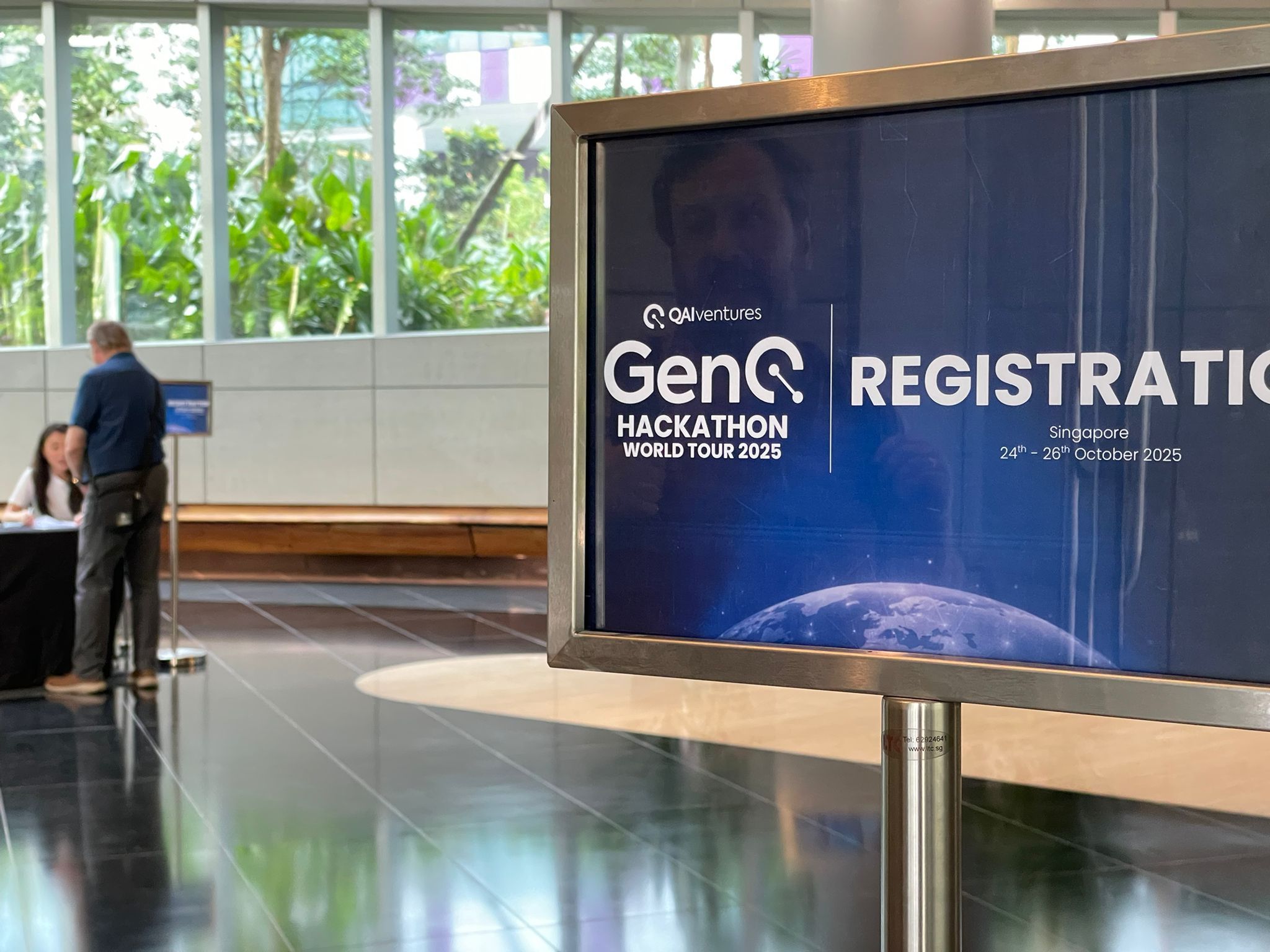
Singapore Quantum Hackathon QAI Ventures

From Idea to Proof of Concept (PoC) in 48 Hours at

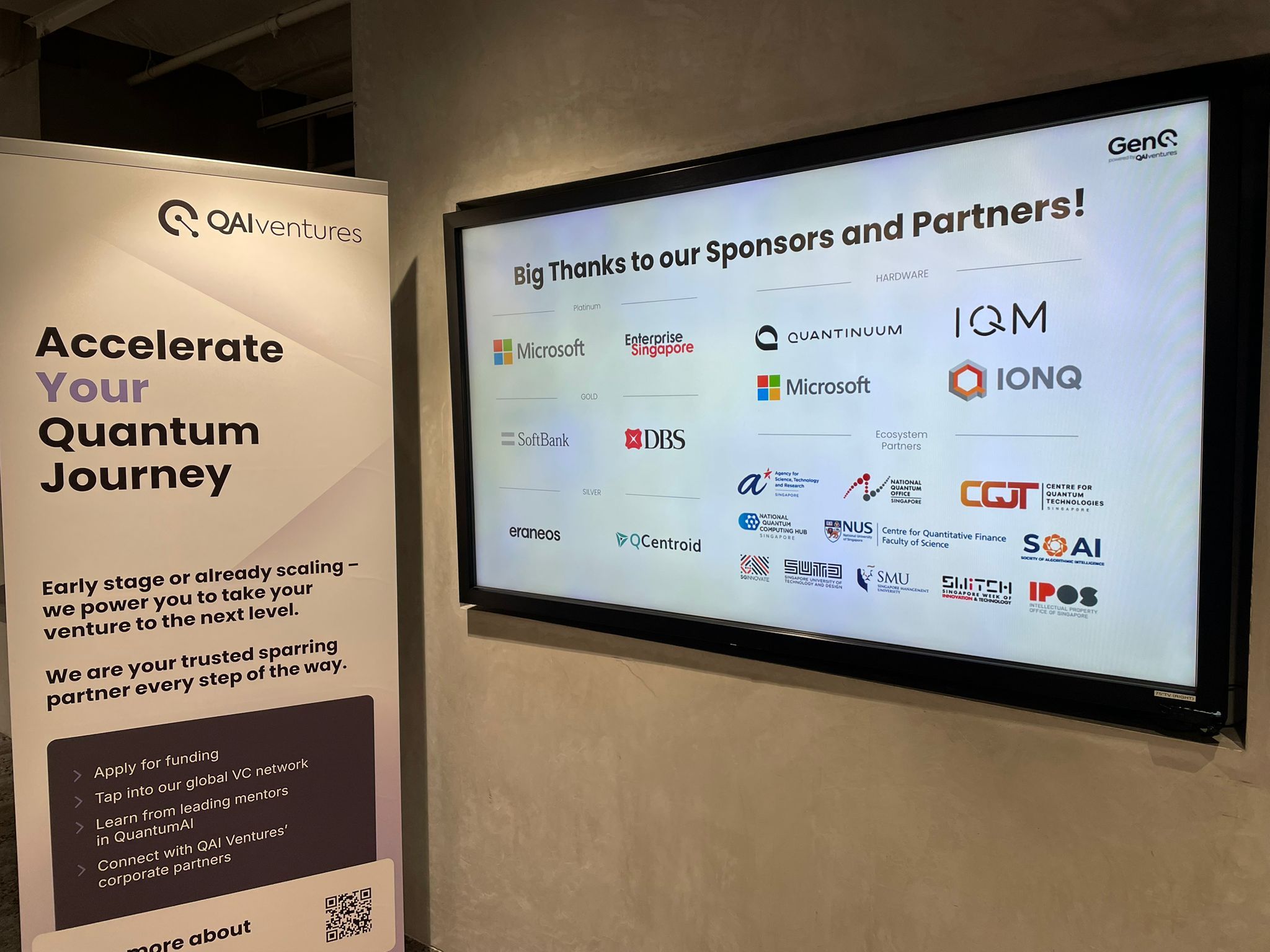
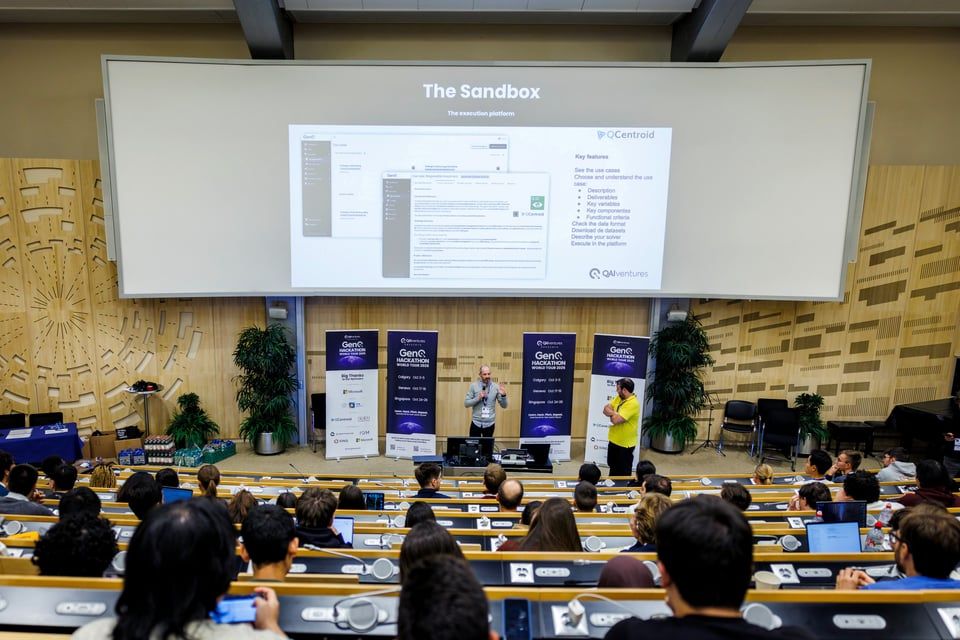
Over the past few months, QCentroid has proudly partnered with QAI Ventures to power the GenQ Global Hackathon Series. Across three high-energy events in Calgary (Energy), Geneva (Life Sciences), and Singapore (Finance), we witnessed a glimpse of the future of industry-specific AI and Quantum solutions.

These global sprints brought together hundreds of the world’s brightest students to tackle real-world complexities – from Counterparty Credit Risk and Fraud Detection to advanced Life Sciences case studies – all compressed into intense 48-hour development windows.

Why QCentroid? The Readiness Accelerator

In a 48-hour sprint, tools are either critical enablers or fatal distractions. While many companies talk about “Quantum Operations,” we know that for today’s market, the real challenge is Readiness. The success of the GenQ series hinged on one core element: eliminating the technical friction that usually stalls innovation.

Zero-Friction Onboarding: Ending Quantum Computing “Dependency Hell”

In a time-compressed environment, losing hours to environment setup is a project-killer. Our platform provided a genuine “login-and-code” experience. By pre-configuring complex quantum SDKs and environments, we ensured that participants spent zero minutes on troubleshooting and 100% of their time on solving the problem.

Enterprise-Grade Stability at Scale

Supporting three distinct, high-intensity sprints globally served as more than just a collaboration—it was an Enterprise Hardening exercise. By maintaining a seamless infrastructure across North America, Europe, and Asia, we proved that the QCentroid environment is ready for the most demanding corporate “sandboxes,” ensuring identical conditions for every team, regardless of location.

The Universal Adapter for Hybrid Workflows

QuantumOps served as a neutral gateway. Teams accessed five different hardware providers throughout the tour—IonQ, Microsoft, Quantinuum, QuEra, and IQM—allowing them to rapidly iterate and benchmark solutions and quantum algorythms across the world’s leading quantum backends within a single interface.

Key Capabilities: Empowering the Business-First Journey

The students’ success was directly linked to the features that bridge the gap between business logic and technical execution:

  • The Power of the Launchpad: Participants overwhelmingly chose our built-in coding environment over external IDEs. This confirms that an integrated, low-friction workspace is the fastest route to a working prototype.
  • The Readiness Catalog: To accelerate prototyping, students leveraged a pre-loaded catalog of solvers and templates. This “Quantum Program Builder” approach allowed teams to start with a foundation rather than a blank page.

The Numbers: Impact at Scale

The data confirms the velocity achievable when you remove technical barriers:

  • Global Reach: 3 Continents (North America, Europe, Asia).
  • 100% PoC Velocity: Every single winning team successfully deployed a working Proof of Concept (PoC) on the platform within the 48-hour window.

Looking Ahead: Your Roadmap to Quantum Readiness

While supporting emerging talent is rewarding, these hackathons served as a crucial stress test for our platform. The insights gained from these high-pressure environments have directly informed our roadmap, hardening our connectors (including our latest IQM integrations) and refining our “Business-First” agentic flows.

The platform that can reliably support global, high-intensity hackathons is ready for your enterprise challenges.

Is your organization ready to move from “Quantum Hype” to “Quantum Ready”? Contact us today to see how QCentroid can accelerate your transition from a business idea to an industry solution.

Unlocking new opportunities: Quantum Computing-as-a-Service for Industry Hubs and Associations

Industry hubs and associations are constantly looking for innovative ways to provide value to members, drive engagement, and ensure the financial sustainability of the organization. Quantum Computing represents a transformative opportunity that could position your association or hub as a leader in this cutting-edge technology, while creating significant new revenue streams.

Let’s explore how integrating a Quantum Computing as a Service (QCaaS) platform, like QCentroid’s, can enable your association to stay ahead of the curve, enhance your value proposition, and attract a wider base of members.

The Case for Quantum Computing in Industry Hubs

Quantum computing is no longer the stuff of science fiction. Its potential to revolutionize industries is already being explored in sectors like finance, healthcare, energy, and logistics. From solving complex optimization problems to accelerating drug discovery, quantum technologies promise breakthroughs that were previously unimaginable.

For your members, this means access to tools that can:

  • Optimize supply chains and logistics, saving costs and improving efficiency.
  • Revolutionize materials science for manufacturing and R&D.
  • Enhance risk analysis and fraud detection in financial services.

By offering QCaaS as part of your association’s membership benefits, you’re not just providing access to a powerful tool; you’re positioning your organization as an enabler of cutting-edge innovation.

Real-World Success: How Associations Leverage SaaS Platforms

Many associations have successfully integrated SaaS (Software as a Service) platforms to enhance member value. Consider examples like:

  • Technology & Services Industry Association (TSIA): Provides members with exclusive data analytics tools, business frameworks, and advisory services tailored to their industries.
  • Cloud Software Association (CSA): Offers members resources and networks to develop and scale SaaS partnerships.

These examples demonstrate that associations can thrive by offering their members tailored technological solutions. By following their lead and adopting QCaaS, you can replicate this success in the quantum computing domain.

Unlocking Value for Your Members

Introducing QCaaS can make your association indispensable to your members. Here’s how:

  1. Exclusive Access to Quantum Resources: Partner with a QCaaS provider like QCentroid to offer your members privileged access to quantum computing platforms. This could include discounted usage rates, tailored industry solutions, or access to a shared quantum environment for experimentation and innovation.
  2. Educational Opportunities: Offer training sessions, webinars, and certifications to upskill your members on quantum computing. This not only empowers them but also positions your association as a thought leader.
  3. Collaborative Innovation: Foster collaboration among your members by creating quantum-focused working groups or R&D initiatives. This creates networking opportunities while driving meaningful advancements.

Creating a New Revenue Stream

Incorporating QCaaS isn’t just about providing value; it’s also a smart business decision. Here’s how it can contribute to your bottom line:

  • Subscription Models: Charge members a premium for access to QCaaS tools and services.
  • Educational Programs: Monetize training and certification programs tailored to quantum computing applications in specific industries.
  • Consulting Services: Leverage your association’s expertise to provide members with bespoke consulting on how to integrate quantum solutions into their businesses.

Why Start Now?

The quantum computing revolution is already underway. Early adopters will have a significant competitive advantage, and your association has the chance to lead the charge. By offering QCaaS to your members, you position your organization as a pioneer in enabling innovation and as an indispensable resource for businesses preparing for the quantum era.

Next Steps

Ready to bring quantum computing to your association? Here’s how to get started:

  1. Assess Member Needs: Survey your members to identify where quantum computing could have the most impact.
  2. Partner with a QCaaS Provider: Collaborate with a trusted platform like QCentroid to tailor solutions for your members.
  3. Develop a Rollout Plan: Create a strategy for launching QCaaS as a member benefit, including training, access, and marketing initiatives.

By taking these steps, you’ll ensure that your association stays relevant, innovative, and indispensable to your members. Quantum computing isn’t just the future—it’s an opportunity you can seize today.

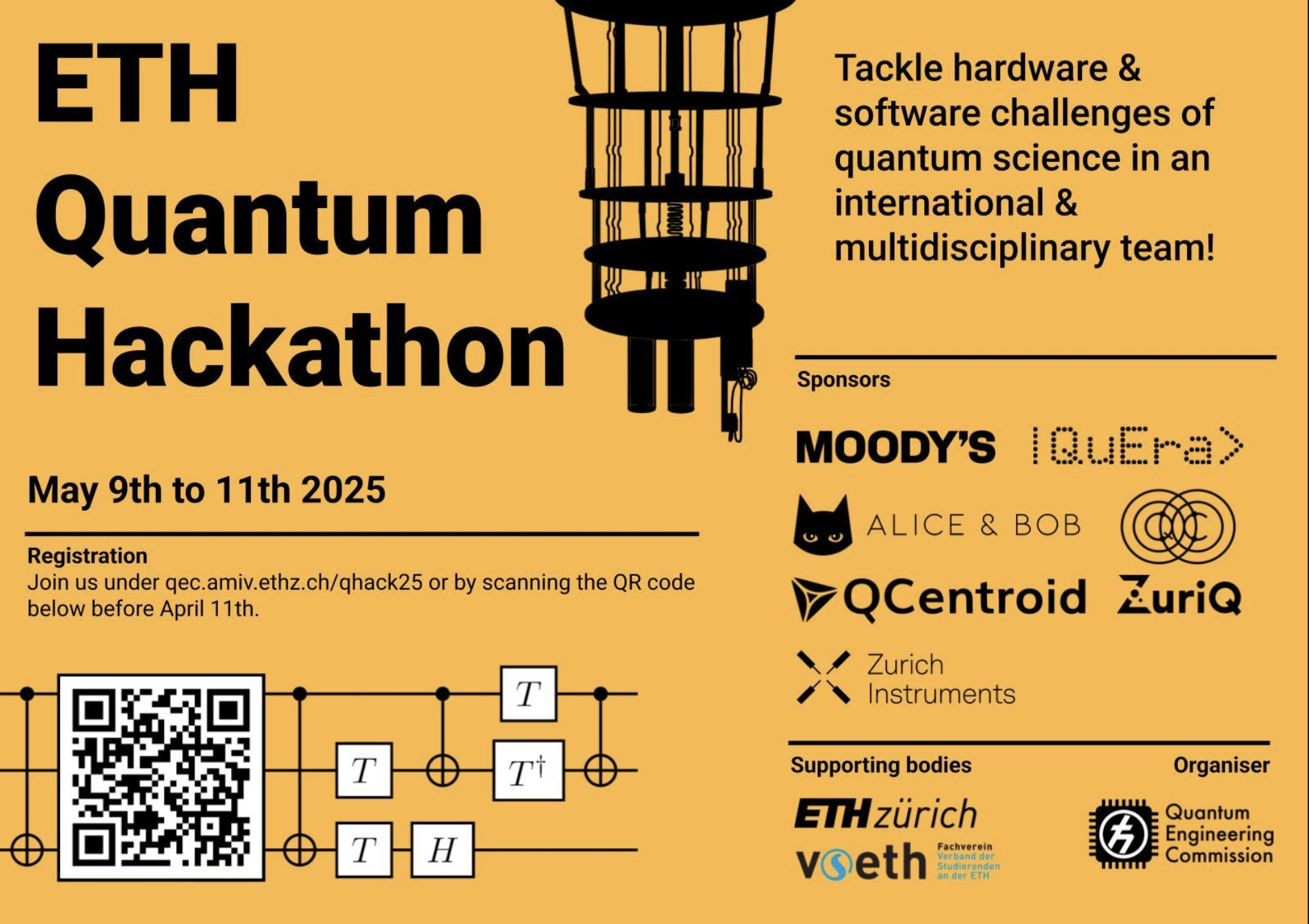
QCentroid at ETH Quantum Hackathon 2025

Quantum Portfolio Optimization Challenge Recap

Last weekend, QCentroid participated in the ETH Quantum Hackathon 2025, an exciting gathering of bright young minds from around the world, all coming together to push the boundaries of what’s possible with quantum technology. As proud sponsors of one of the official hackathon challenges — the Quantum Portfolio Optimization challenge — we witnessed firsthand the creativity, energy, and technical talent of the next generation of quantum developers.

Hosted at ETH Zurich and organized by the Quantum Engineering Commission, with the support of AMIV and VSETH, the ETH Quantum Hackathon is one of the leading events in the global quantum community. The 2025 edition brought together students, researchers, and early-career professionals for three days of hands-on building, experimentation, and innovation, with participants tackling real-world quantum problems across various industries.

The QCentroid Challenge: Quantum Portfolio Optimization

Key Insights from the Quantum Portfolio Optimization Challenge

Our challenge track, we asked participants to design and implement a quantum routine inside a portfolio optimization algorithm based on real-world datasets. The goal was to allocate investments across a set of assets, using the unique computational power of quantum devices to explore the solution space more efficiently than classical methods can. They could select where to put the quantum routine (asset selection, expected return guess, asset allocation, etc) and, using classical parts of well known algorithms, improve the behaviour of one or more steps of those algorithms using classical parts of well-known algorithms.

Portfolio optimization is a natural use case for quantum computing, as it involves solving complex optimization problems that quickly become intractable as the number of variables grows. We challenged participants to go beyond basic implementations and think creatively about how quantum mechanics could be leveraged to find optimal investment strategies.

To support the teams, QCentroid provided guidance, mentorship, and access to documentation and resources. Participants used their development environments along with different simulators, ensuring accessibility and flexibility across various teams.

Five teams took on the QCentroid challenge, each bringing their unique approach. The diversity of ideas and strategies showcased the richness of quantum algorithm design, reminding us of how early we still are in this field and how much potential lies ahead.

The winning team stood out with a particularly elegant approach to the problem. Using creativity, they transformed the problem into a well-known problem and solved it with a modified fundamental algorithm. They added some real-world constraints not to increase difficulty but to ease the solution. 

Other teams solved the problem with approaches from graph theory to variational solutions with impressive theoretical results, aiming to explore how they could perform in the real world. 

This kind of insight and originality is exactly what we hoped to see when designing the challenge. It confirmed that quantum-native thinking — building algorithms that align with how quantum systems behave — can offer new avenues for solving longstanding problems in finance and beyond.

Why Quantum Hackathons Matter for the Future of Quantum Computing

Beyond the technical solutions, what impressed us most was the participants’ passion, energy, and collaborative spirit. Teams navigated quantum concepts, implemented algorithms, tested code, and presented thoughtful final solutions. It was a reminder that the future of quantum computing is not just about hardware or software — it’s about people. And the future is bright.

Being part of this event reaffirmed QCentroid’s mission to make quantum and advanced computing accessible and useful for enterprises of all sizes. Through our QuantumOps platform, we aim to reduce the barriers to entry, helping organizations explore, integrate, and scale quantum solutions in a way that aligns with their business goals.

Events like the ETH Quantum Hackathon show we’re not alone in this mission. The momentum is building, and a new wave of quantum developers is emerging — one that is diverse, interdisciplinary, and deeply motivated to use this powerful technology for good.

Looking Ahead

We sincerely thank ETH Zurich, the organizers — Quantum Engineering Commission, AMIV, and VSETH —, professors, other sponsors, and, of course, the amazing participants who joined our challenge track. We’re excited to keep supporting initiatives like this and building bridges between academia, industry, and the quantum community.

If you’re curious to learn more about the Quantum Portfolio Optimization challenge or want to dive into some of the winning solutions, you can visit the official hackathon page here:
ETH Quantum Hackathon 2025

Let’s keep pushing boundaries, exploring new ideas, and making the quantum future a shared reality.

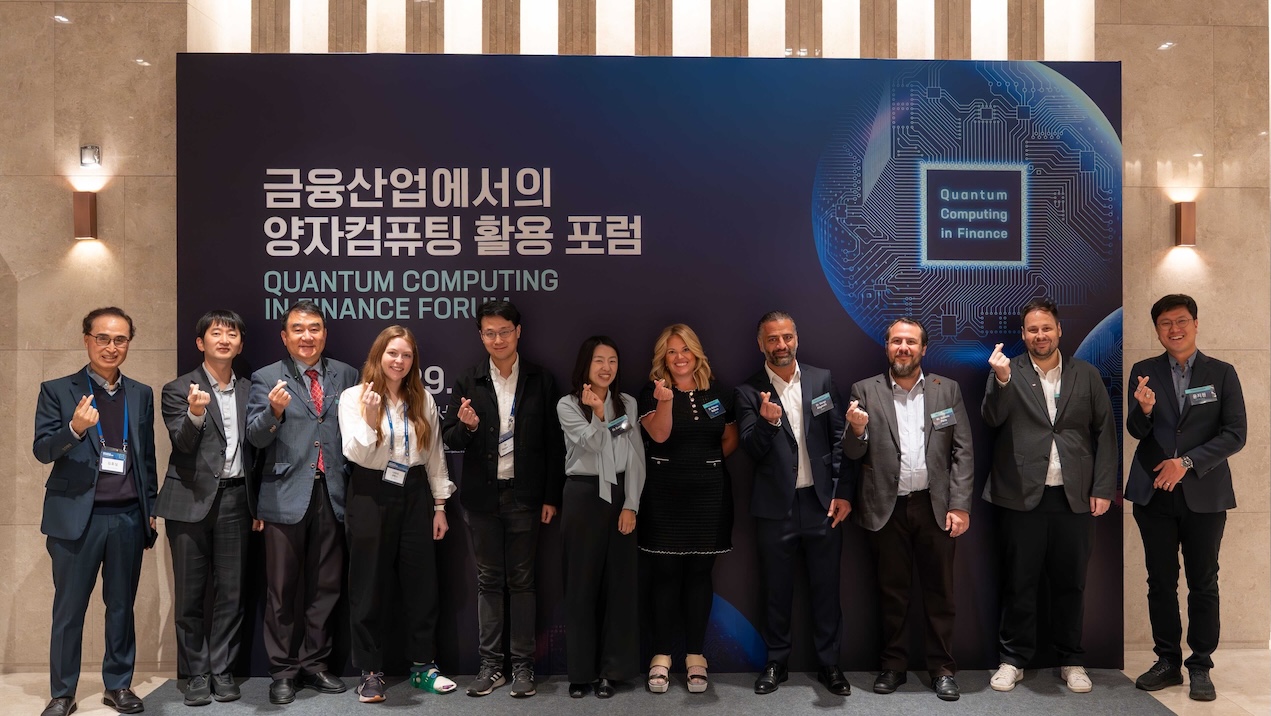
QCentroid at Seoul’s Quantum Finance Forum | Quantum computing in finance

An impactful week for QCentroid in Seoul! 🇰🇷

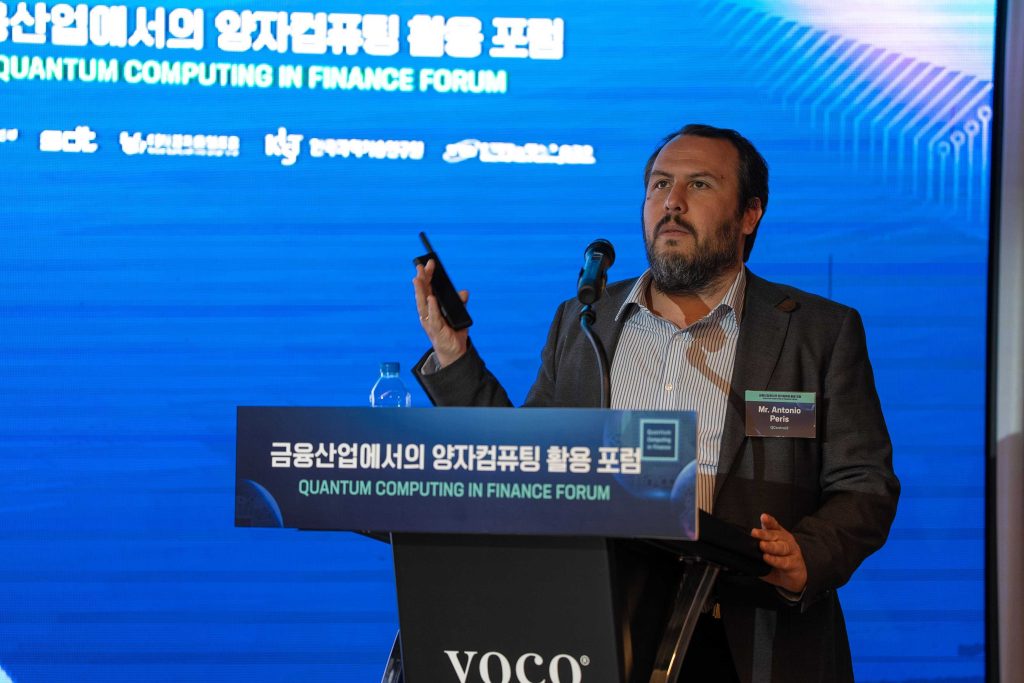
Our Co-founder, Antonio Peris, presented at the Quantum for Finance Forum, sharing how QCentroid’s orchestration platform unlocks quantum and advanced computing for practical enterprise use.

Antonio Peres, Quantum computing in finance, Seoul's Quantum Finance Forum

Key Insights from the Forum:

  • Quantum is Moving to Practice: Leading financial institutions like JPMorgan Chase and HSBC are not just exploring theory. They’re actively piloting quantum solutions for complex risk modeling and portfolio optimization. This signals a clear shift: quantum is becoming a tool for today, not just tomorrow.
  • Addressing Real-World Financial Challenges: Discussions highlighted quantum’s potential to tackle previously intractable problems in finance. Think more accurate fraud detection, hyper-personalized financial products, and significantly faster trade settlements. The impact? Enhanced efficiency, reduced risk, and new revenue streams.
  • Cross-Sector Collaboration is Key: The strong presence of finance leaders, IT experts, researchers, and policymakers underscored a vital point: building a robust quantum ecosystem requires diverse expertise and shared learning. This collaborative spirit is crucial for accelerating adoption and navigating the complexities of this new frontier.

Korea’s Quantum Leap – The Opportunity:

  • Strategic Advantage: Korea’s focused approach to quantum, backed by government initiatives and dynamic domestic champions like SDT Inc., offers a unique opportunity. By starting with a strategic vision, Korea can avoid early adopter pitfalls and build a highly competitive, quantum-ready financial sector.
  • Building Future-Proof Infrastructure: The discussions emphasized creating a foundational quantum infrastructure now. This means Korean industries can leapfrog older technologies, embedding quantum capabilities directly into their core operations for a lasting competitive edge.

QCentroid’s Role – Enabling Practical Quantum Adoption:

  • Learning from AI/ML’s Journey: The path to successful AI adoption taught us valuable lessons about the need for standardization, clear ROI demonstration, and user-friendly platforms. QCentroid applies these learnings, simplifying quantum access and integration, making it less of a research project and more of a business solution.
  • Orchestration is Non-Negotiable: As quantum hardware and algorithms diversify, an effective orchestration platform becomes essential. It allows businesses to benchmark different solutions, integrate with existing IT, and manage complex workflows. QCentroid provides this critical layer, ensuring enterprises can harness the best of quantum and keep track of breakneck technology progress.
  • Fostering Collaborative Ecosystems: Our platform is designed to support both private enterprise initiatives and broader collaborative projects, like those seen with @Moody’s or BIQAIN (Basque Quantum Hub). This flexibility helps accelerate innovation across the entire Korean quantum landscape.

A sincere thank you to the organizers – the Ministry of Science and ICT, SDT Inc., Future Quantum Convergence Forum (FQCF), KIST, and the Telecommunications Technology Association – for orchestrating such a pivotal event. Special appreciation to Natasha Kovacs for her outstanding efforts. It was also a pleasure to share the stage with experts and practitioners from JPMorgan Chase, HSBC, Deloitte, Opetek, ETRI, and @Yonsei University, and to engage with all the participants.

QCentroid is enthusiastic about contributing to Korea’s vibrant quantum future and quantum computing in finance. The potential for innovation and growth is immense, and we are ready to collaborate.

QuIC’s Recommendations for Europe’s Quantum Strategy: What It Means for Business (And Why You Should Care)

The European Quantum Industry Consortium (QuIC) has just published its recommendations for the EU’s Quantum Strategy, a document packed with insights, warnings, and, most importantly, opportunities. Carlos Kuchkovsky, CEO of QCentroid, has been one of the key contributors to this work, leveraging his experience as the former Head of Innovation at BBVA, as well as leading the work of the European Quantum Flagship on benchmarking and standardization. As he puts it in the recommendations, addressing organizations across Europe:

The challenge isn’t whether Quantum Computing will be relevant, but how fast companies can adapt.

But before you assume this is just another policy paper, slow down and take a look at our breakdown because details matter at this time. If you’re leading a company in finance, healthcare, logistics, or any data-heavy industry, what happens in quantum doesn’t stay in quantum. It’s about to change the way you do business.

Key Takeaways from the QuIC Report: What Matters for Business?

1. QuIC Recommends Europe Build Its Own Full-Stack Quantum Computer (Because Who Likes Dependencies?)

QuIC advises Europe to push for a “Made in Europe” quantum stack—hardware, software, and everything in between. The goal? Less reliance on non-European tech, more strategic independence.

Why you should care: Right now, quantum computing breakthroughs often come from the US, China, or Australia, for example. A strong European ecosystem means local businesses get better access, potentially with government-backed incentives. If you’re in an industry that needs high-powered computation (finance, logistics, pharmaceuticals), this is good news.

2. A Stronger Quantum Supply Chain (So We Don’t Have Another Chip Crisis, But With Qubits)

QuIC stresses the need for Europe to strengthen its quantum supply chain—funding research, securing raw materials, and creating a resilient network.

Why you should care: A stable supply chain means fewer bottlenecks when your business is ready to experiment with quantum solutions. It also means better pricing and competitive access to quantum hardware, reducing reliance on non-EU providers.

3. Making Europe a Quantum Investment Hotspot (Translation: Money Talks, Let’s Keep It Here)

QuIC’s recommendation? More incentives, better funding models, and smoother regulations to make Europe a more attractive place for quantum startups and investors.

Why you should care: If you’re considering dipping your toes into quantum, either through partnerships or direct investment, Europe is working on making it easier and more lucrative. Expect more accelerators, funding pools, and potential tax benefits.

4. Quantum Standards & Benchmarks (Because Right Now, It’s a Bit of a Wild West)

Quantum computing today is like the early days of AI—everyone’s hyped, but there’s little standardization. Europe wants to lead the way in setting benchmarks for performance, security, and interoperability.

Why you should care: If your company is considering quantum tech, clear standards will help you compare solutions apples-to-apples rather than trying to decode marketing jargon from different vendors. It also makes integration with existing IT infrastructure smoother. An insider tip: you can already compare many of the quantum solutions from various providers head-to-head with the QCentroid platform. 

5. Turning Intellectual Property into Revenue (Instead of Just Cool Science)

Europe has world-class quantum research but has historically lagged in commercialization. The strategy aims to change that by improving how quantum intellectual property (IP) is protected and monetized. QuIC recommends that Europe focus on better protecting and commercializing quantum intellectual property.

Why you should care: More structured IP policies mean that investing in quantum won’t just be for big tech players. Mid-sized enterprises and even non-tech companies can find commercial angles, whether through licensing, collaborations, or applied research projects.

6. Building a Quantum Workforce (Because Someone Has to Understand This Stuff)

QuIC calls for major investment in education, training, and reskilling initiatives to ensure Europe has enough quantum-literate professionals—not just scientists, but also business leaders who know how to implement the tech.

Why you should care: Finding skilled quantum professionals today is like trying to hire blockchain developers in 2015—difficult and expensive. A structured workforce plan means better talent pipelines for businesses wanting to explore quantum applications.

7. Keeping European Quantum Independent (So We Don’t Have to Beg for Access Later)

Security is a major concern. QuIC emphasizes the need for European control over critical quantum technologies, especially cloud-based quantum services, whether in banking, defense, or healthcare.

Why you should care: If your business handles sensitive data, future EU regulations might favor quantum solutions developed and hosted within Europe. Getting ahead of compliance now could save you a lot of headaches later.

8. Quantum for Sustainability & Social Good (Not Just for Science Fiction Plots)

QuIC recommends that quantum support broader sustainability goals—both environmental and social. This includes promoting responsible innovation, supporting green quantum tech, and aligning with the UN Sustainable Development Goals.

Why you should care:  As ESG reporting gets more serious, quantum applications in climate modeling, sustainable supply chains, and green energy could unlock real efficiencies and regulatory advantages. Plus, inclusive frameworks mean a more diverse future talent pool—and better optics for your brand.


Final Thoughts: What Should Businesses Do Now?

  1. Start preparing for quantum computing. You don’t need a quantum team yet, but understanding potential applications in your industry will prepare you for the next step.
  2. Keep an eye on EU funding and incentives. There is money available to support early adoption.
  3. Consider partnerships. Why take all the risks and a budget hit going it alone? Join forces with one or more quantum teams at startups and vendors and share the burden. You help them advance, they help you get answers you need. 

If you’re curious about how quantum computing could impact your business, now is the time to start paying attention.

Want to dive deeper? Read the full QuIC recommendations here and book a demo with our team.

QCentroid at MWC 2025: Quantum Computing Moves from Curiosity to Strategy

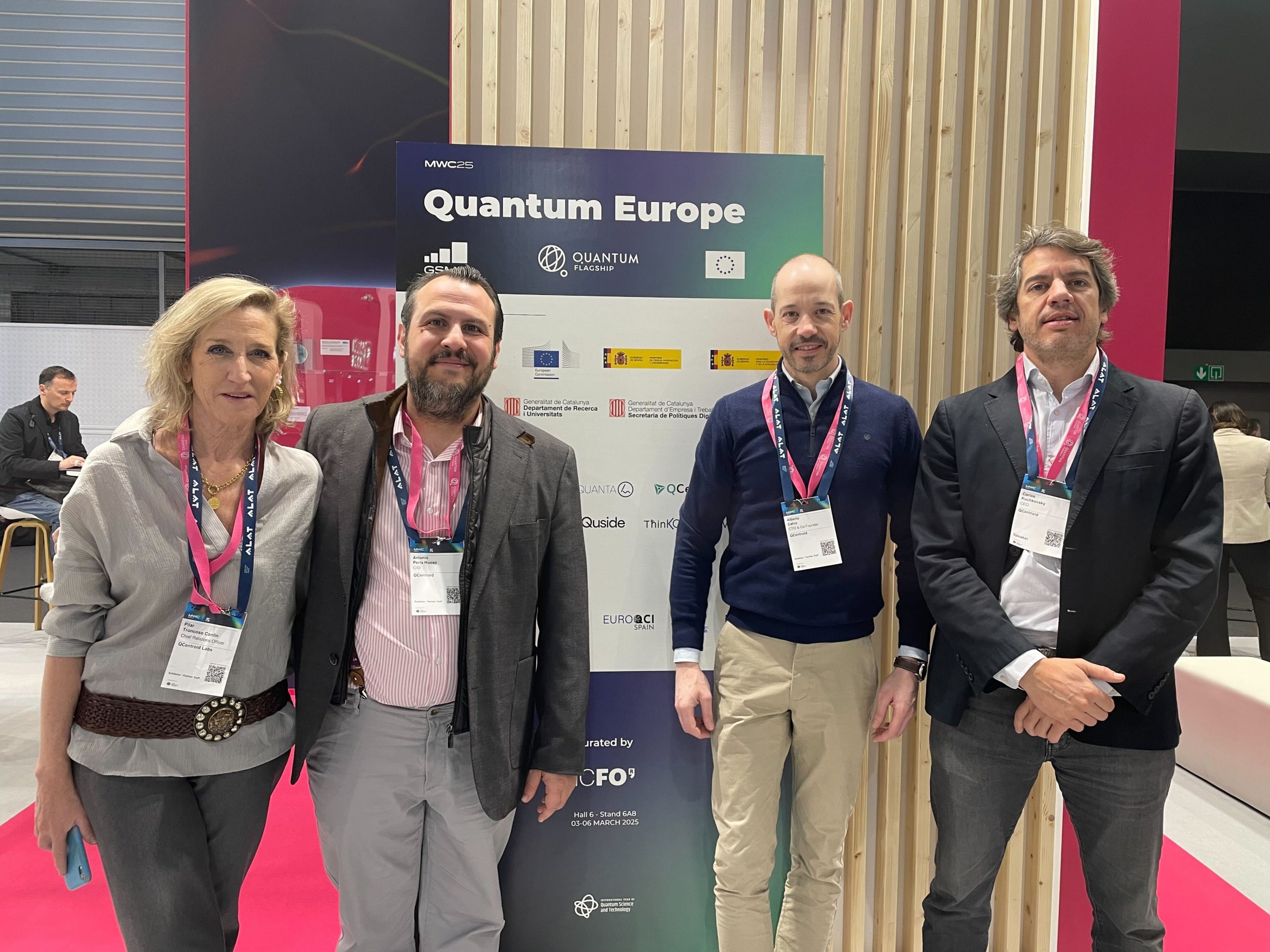
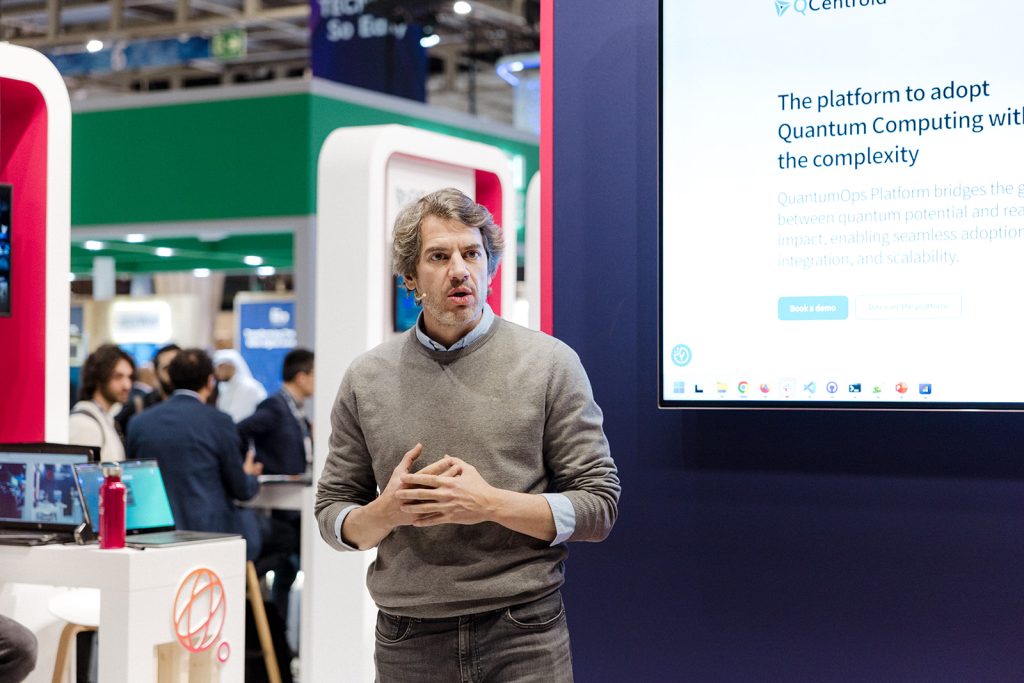
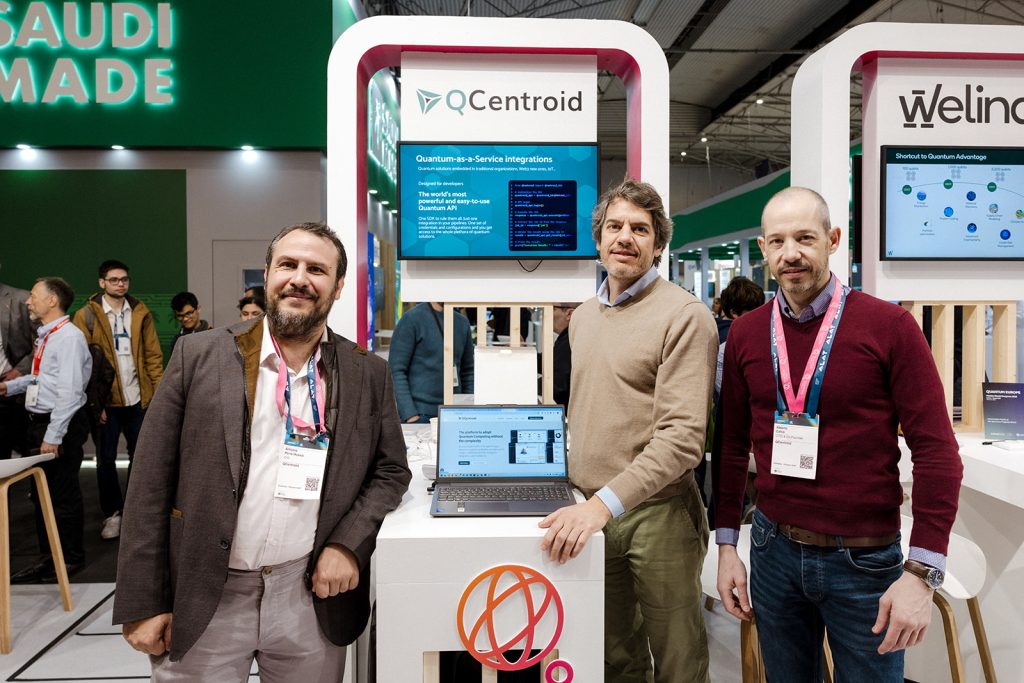
Pilar Troncoso, Antonio Peris, Alberto Calvo and Carlos Kuchkovsky at MWC 2025 Barcelona, Day 1

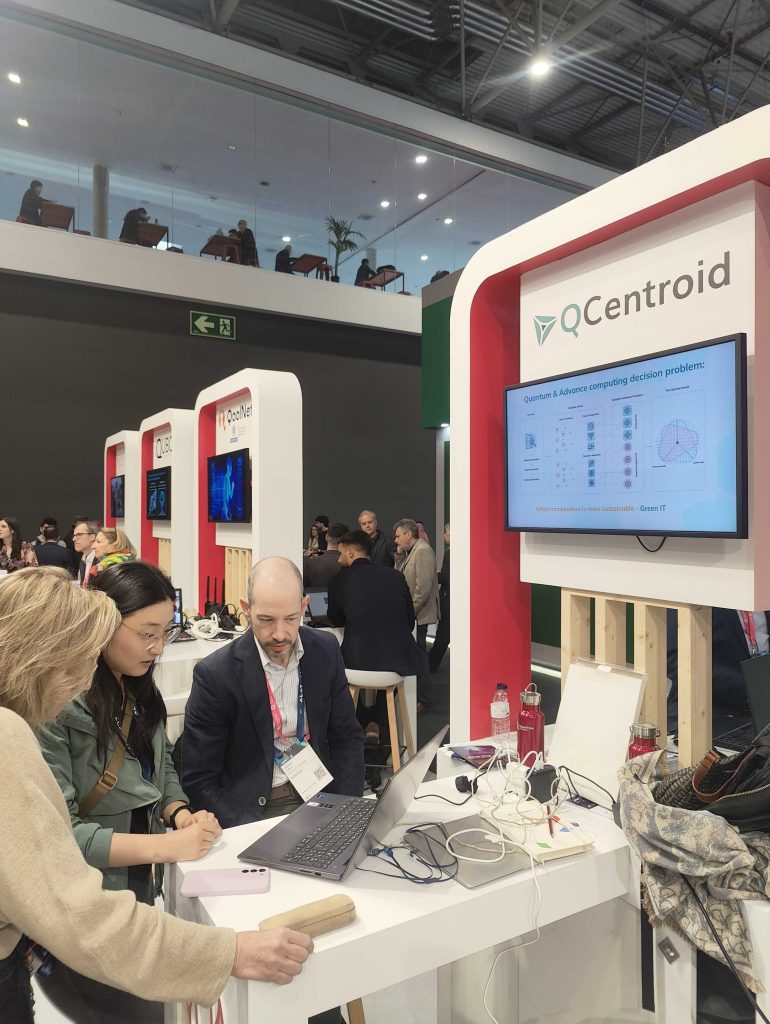
MWC Barcelona 2025 proved to be a pivotal moment for quantum technologies, with QCentroid at the forefront of transforming theoretical quantum concepts into practical business applications. Our team experienced four days of intense engagement, strategic partnerships, and real-time demonstrations that showcased how quantum computing is rapidly transitioning from speculative interest to concrete implementation strategies.

Day One: The Strategic Shift

The opening day at MWC25 demonstrated a marked evolution in how businesses approach quantum technologies. Conversations have notably shifted from exploratory curiosity to strategic planning, with corporations demonstrating sophisticated understanding of quantum’s potential business impact. Companies are now actively incorporating quantum solutions into their technology roadmaps rather than viewing them as distant possibilities.

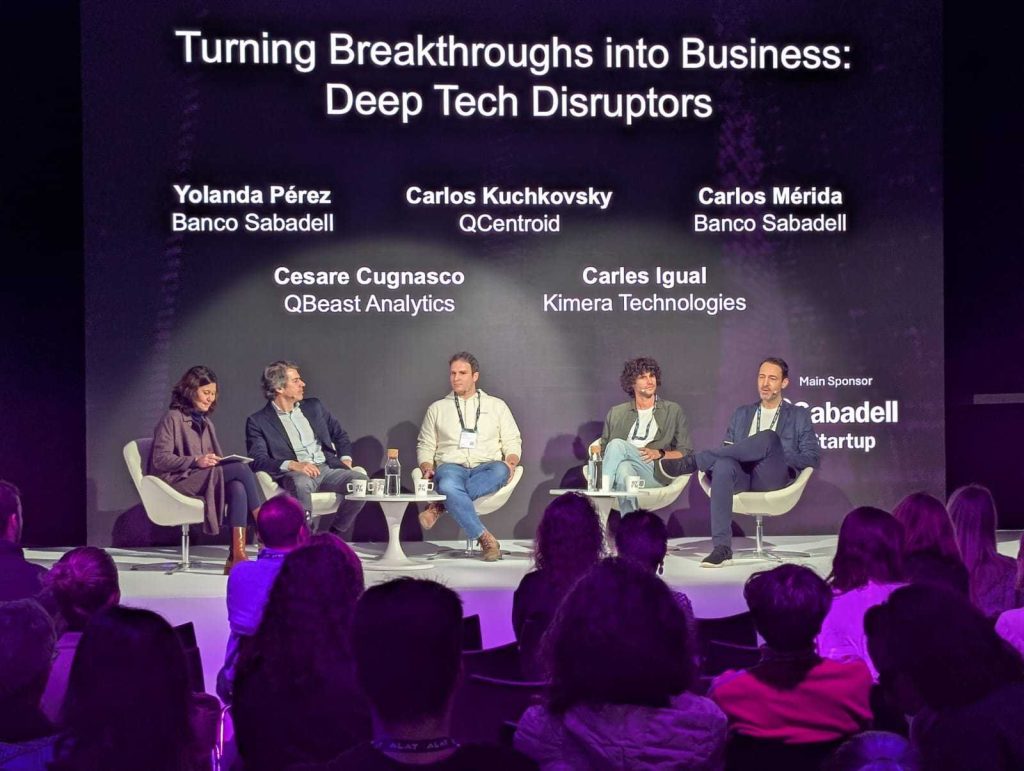
Our participation in Telefónica’s “Quantum Technologies and Public-Private Collaboration” session highlighted how strategic partnerships accelerate quantum adoption across industries. Simultaneously, our contribution to the startup session “Turning Breakthroughs into Business: Deep Tech Disruptors” explored the critical pathway from scientific innovation to market-ready solutions.

QUORUM: Making Quantum Happen Through Public-Private Power Moves

While showcasing our platform at MWC, we also advanced the QUORUM initiative—a CDTI-funded program quietly transforming Spain’s quantum ecosystem. Instead of just talking about quantum possibilities, QUORUM lets us actually build them.

At MWC, this meant getting practical:

  • Rolling out our integration solutions that connect quantum computing to real industrial challenges and energy transition needs
  • Putting quantum algorithms through their paces with actual benchmarking for sustainability use cases
  • Breaking down barriers to quantum access with our Quantum-as-a-Service (QaaS) approach that works for both businesses and public organizations

QUORUM isn’t just another government program – it’s our accelerator for turning quantum theories into tools that tackle sustainability, climate, and digital transformation challenges. No fluff, just results

Day Two: Quantum at the Intersection of Public and Private Sectors

The second day centered on strengthening crucial relationships between quantum innovation and industrial strategy. Our partnership with Telefónica and the Bizkaia Provincial Council demonstrated how the QCentroid Platform serves as an essential bridge between advanced quantum computing capabilities and practical business applications.

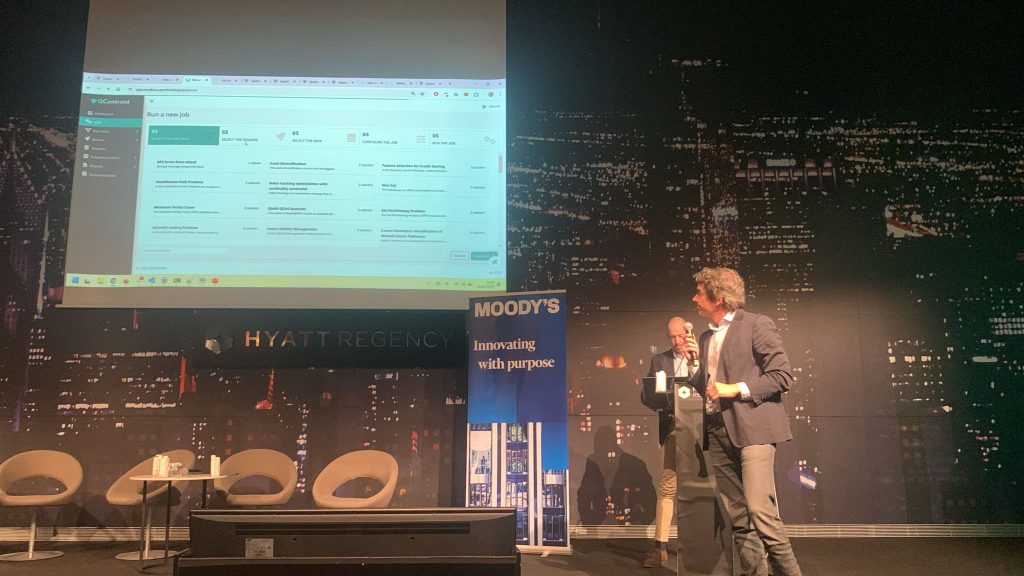
Our CEO, Carlos Kuchkovsky, joined industry leaders from Banco Sabadell, Kimera Technologies, and Qbeast to address the challenges deep tech founders face when transforming scientific breakthroughs into viable business models. The evening concluded with an exclusive preview of our AI capabilities at the CMS and Moody’s event, setting the stage for our upcoming major announcement.

Day Three: Demonstrating Real-World Quantum Applications

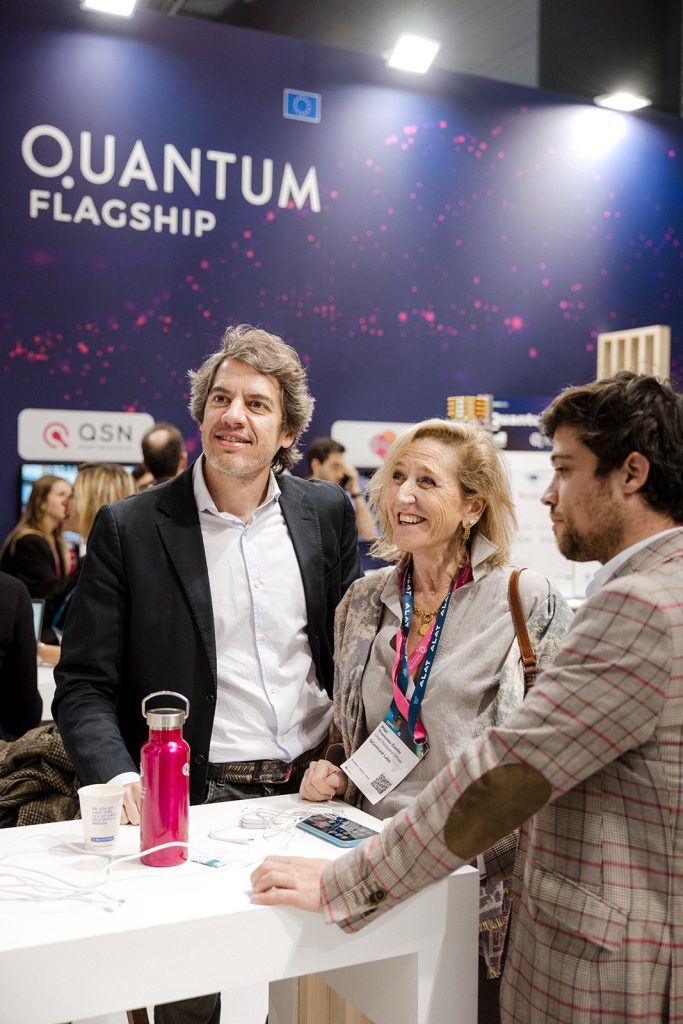
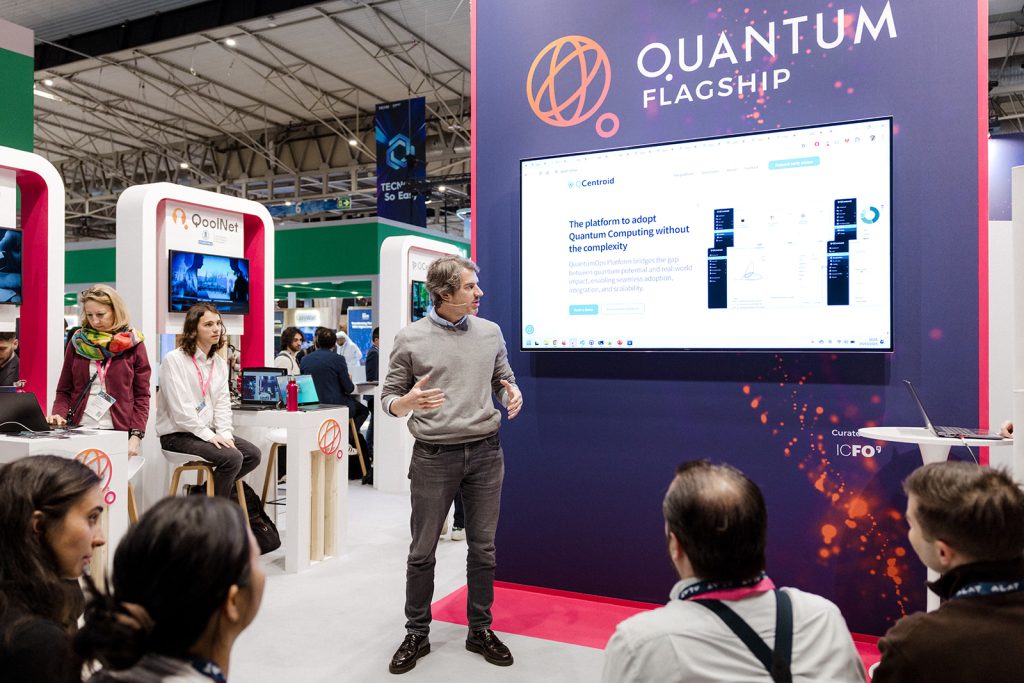
Day three elevated our presence from discussion to demonstration. Rather than presenting theoretical concepts, we conducted a live demonstration of our AI assistant at the Quantum Flagship stage. This interactive session invited audience participation, with attendees suggesting industry challenges for real-time quantum use case identification.

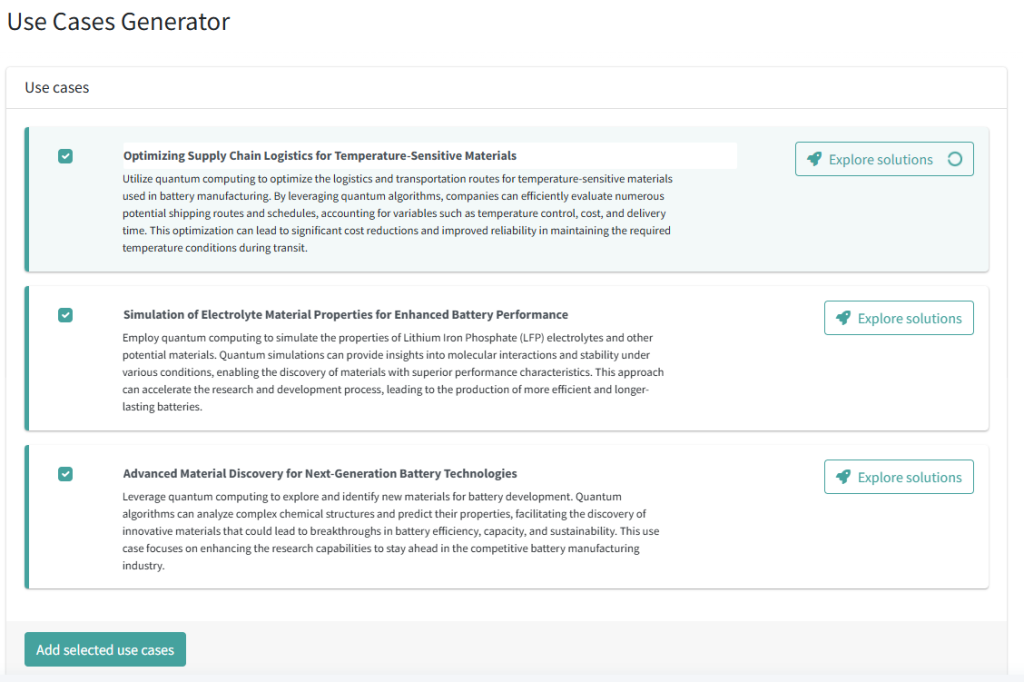
When an audience member proposed “batteries manufacturing” as a test case, our AI assistant immediately generated relevant applications for materials research and catalyzers. This practical demonstration illustrated how quantum-powered AI can deliver immediate value across sectors—emphasizing results over promises.

The Quantum Flagship event drew an impressive cross-section of stakeholders, from public officials and economists to industry leaders and companies exploring quantum integration. Concurrently, we unveiled customized features for Bank Sabadell’s committee, further demonstrating our commitment to developing sector-specific quantum solutions.

Day Four: Engaging the Next Generation of Quantum Talent

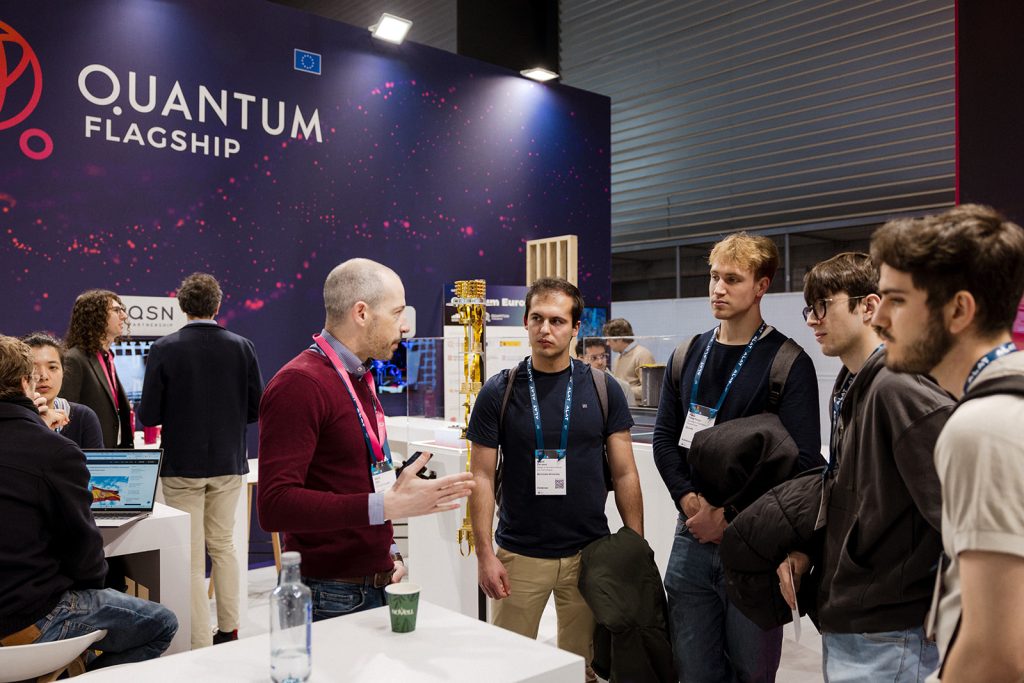
The final day brought a fresh perspective as university students visited our quantum technologies spaces. These interactions provided valuable insights for our upcoming developer tools while reinforcing the importance of nurturing young talent in the quantum ecosystem.

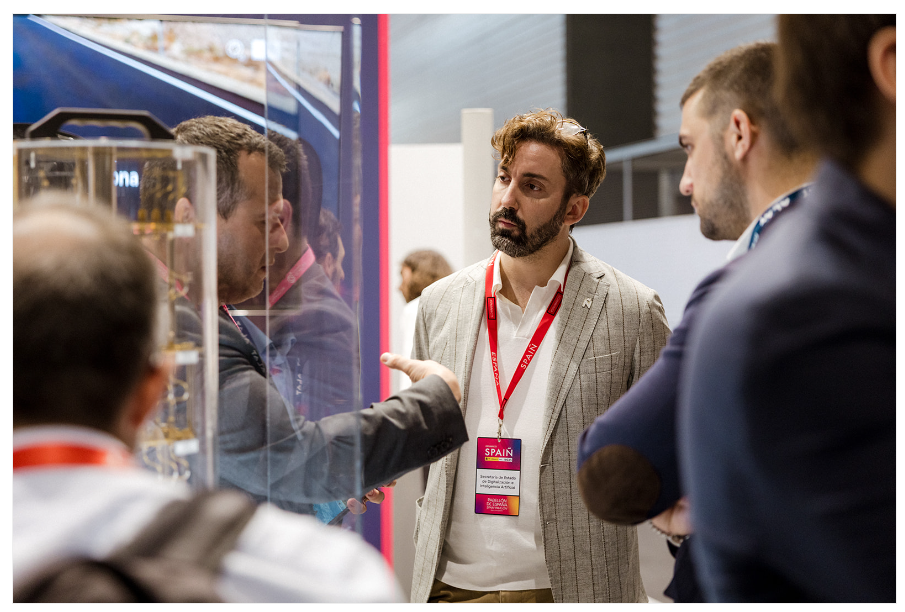
A visit from the Secretaría de Estado de Digitalización e Inteligencia Artificial (SEDIA) highlighted the critical role of public-private collaboration in advancing quantum initiatives. This governmental engagement underscores the strategic importance of quantum technologies at the national level.

Looking Forward: From Exploration to Implementation

As MWC Barcelona 2025 concluded, one thing became abundantly clear: Quantum computing has moved beyond theoretical discussions and entered the phase of practical implementation. Businesses are no longer asking “if” quantum will impact their operations but “how” and “when” to integrate quantum advantages into their strategic planning.

QCentroid stands ready to facilitate this transition, providing the expertise and platform capabilities needed to transform quantum potential into business reality. The connections established and demonstrations conducted at MWC25 have positioned us to accelerate quantum adoption across industries in the coming year.

The quantum future isn’t just approaching—it’s here, and it’s time for businesses to take action. Schedule a call with us, and let’s move together.

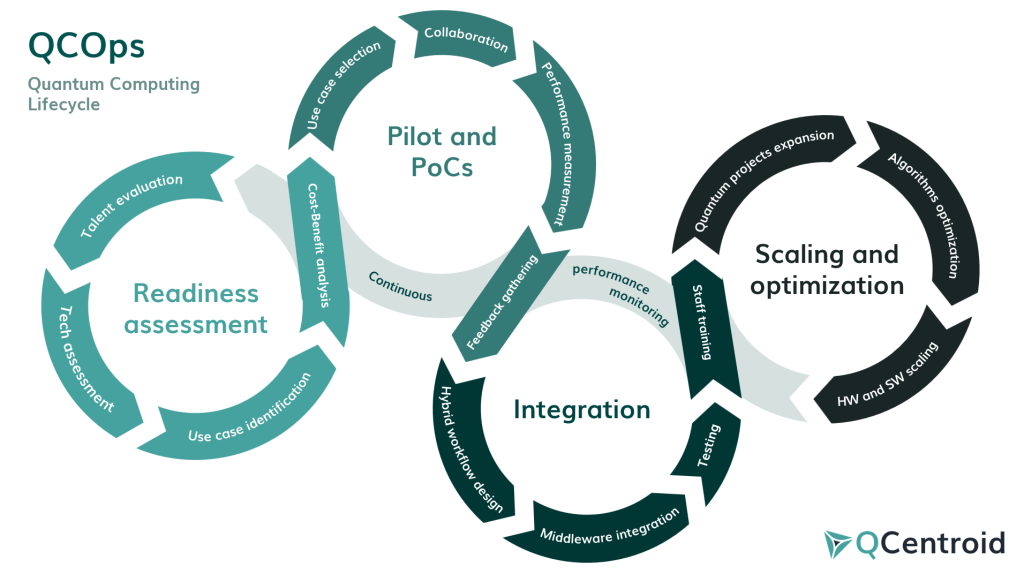
Quantum and advanced computing OPs cycle. A framework for QAC adoption and integration

Quantum Computing is no longer a futuristic concept —it’s here, and it’s reshaping industries. But for many organizations, the path to integrating quantum into their operations is riddled with challenges. The journey is far from straightforward, from navigating the steep learning curve to aligning quantum efforts with tangible business outcomes.

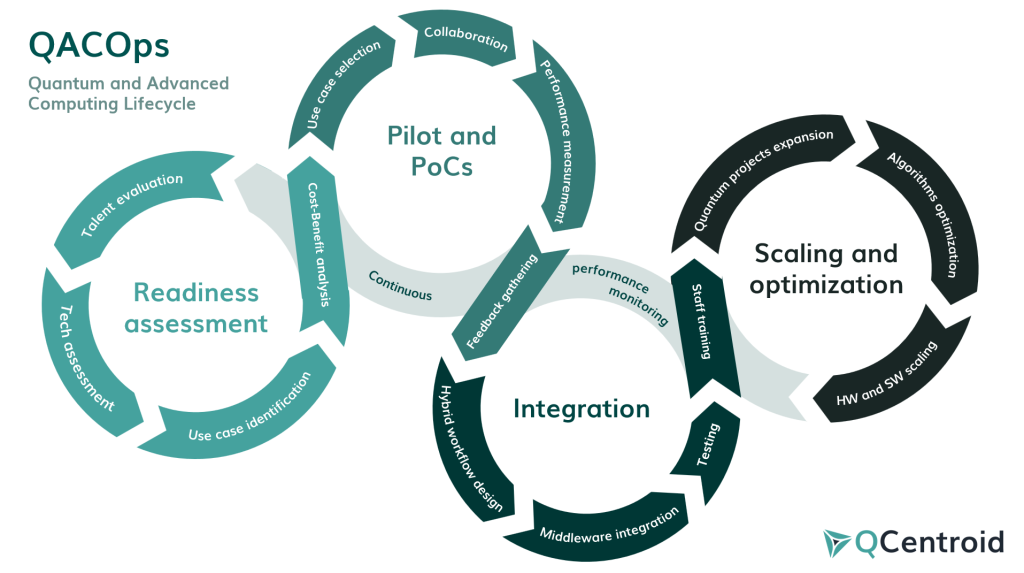
This is where QCentroid’s QuantumOps Platform comes into play. Positioned as a bridge between quantum potential and real-world impact, the platform is designed to help enterprises easily and efficiently navigate the Quantum and Advanced Computing Operational Cycle (QAC-Ops). With its suite of tools and services, QCentroid empowers organizations to embrace quantum computing without the complexity, ensuring a seamless transition into this transformative era.

QAC-Ops cycle visualization

Challenges in Quantum Computing Adoption

Quantum computing operates on principles fundamentally different from classical systems. Its unique ability to process complex computations opens up opportunities in fields like logistics optimization, portfolio management, and drug discovery. However, this potential is often locked behind a wall of technical challenges.

Enterprises frequently struggle with three main hurdles: identifying meaningful use cases, integrating quantum workflows with existing classical systems, and scaling solutions to deliver measurable ROI. These obstacles often deter organizations from fully committing to quantum adoption, leaving them unsure where to start.

How QCentroid Makes the Difference

QCentroid simplifies the quantum adoption journey by providing an end-to-end platform that addresses every phase of the QAC-Ops cycle. Starting with readiness assessment, the platform helps organizations evaluate their current capabilities, resources, and alignment with quantum opportunities. Its intuitive tools guide users in identifying high-value use cases tailored to their specific industry needs.

With the QCentroid platform Roadmap Visualization and Prioritization tool, organizations can create, prioritize, and visualize all the relevant use cases in their industry, classified by different metrics such as business impact, complexity, or impact on energy consumption. This helps to have a visual map and a more clear understanding of where to direct the efforts during the whole process.

When it comes to experimentation, QCentroid platform supports enterprises in running pilot projects and proofs of concept (PoCs), offering a user-friendly interface and an integrated and cloud-hosted development environment for developing and testing quantum algorithms. Businesses can experiment with quantum solutions confidently, knowing they’re supported by a robust, scalable environment that minimizes risks and accelerates results. Also, during this initial phase, the built-in Synthetic Data Generation tool allows organizations to start experimenting without compromising data security and privacy, focusing on evaluating the algorithms and the hardware options.

During this phase, the Experiment Tracking and Benchmarking tool analyses every job run and provides all the necessary information and insights of the PoCs in a meaningful way through comprehensible charts and data tables, to help decide which combination of technologies works best for each use case.

Bridging the Classical-Quantum Divide

Or How to Integrate Quantum and Classical Systems Seamlessly

One of the biggest pain points in quantum adoption is integration—how do you make quantum systems work with your existing IT infrastructure? QCentroid addresses this challenge with its powerful APIs and SDKs that enable seamless interaction between classical and quantum systems. Each algorithm implemented in the platform is automatically assigned an API endpoint, making integrations quicker and more efficient. Additionally, through the Production Solver Selection tool, the IT team can generate an all-in-one endpoint per use case and redirect it to the desired solver with one click.

The platform is hardware-agnostic, providing access to leading quantum processors via the cloud. This flexibility ensures that businesses can explore multiple hardware options without vendor lock-in, optimizing for the best fit as technology evolves. Furthermore, QCentroid’s workflow orchestration tools ensure smooth data exchange between classical and quantum components, creating a hybrid environment where both technologies complement each other effectively.

But, of course, all this is not limited to Quantum Computing. Any other Advanced Computing techniques and providers are constantly being incorporated into the platform, so your organization always has access to the best combination of hardware and software.

Scaling Made Simple

Once the foundational work is done, scaling quantum solutions becomes the focus. QCentroid’s platform is equipped with Advanced Monitoring and Analytics tools to optimize performance at scale. Real-time insights into algorithm efficiency and hardware utilization help enterprises fine-tune their operations, ensuring quantum projects deliver maximum value.

Moreover, the platform supports collaborative features, enabling teams to work efficiently across departments or even with external quantum experts. This collaborative approach fosters innovation and accelerates the time-to-market for quantum-driven solutions.

Continuous Evolution with the Feedback Loop

Quantum computing is a rapidly evolving field, and staying ahead means embracing change. QCentroid’s platform is designed with this in mind, supporting iterative learning and continuous improvement. Built-in feedback mechanisms allow organizations to refine their strategies based on real-world outcomes, integrating the latest advancements in quantum technologies as they emerge.

This adaptability ensures businesses remain at the forefront of quantum innovation, leveraging early wins to build momentum and drive long-term success.

At this point again, the Production Solver Selection tool allows quick railroad switch to a better solution as they emerge during the cycle in the experimentation and benchmarking phases.

Why QCentroid?

QCentroid doesn’t just offer tools, not even an all-in-one platform; it offers a vision—a future where quantum and advanced computing becomes an accessible and integral part of enterprise operations. The platform’s ability to simplify the QAC-Ops cycle, from readiness to scaling and optimization, positions it as a trusted partner for organizations aiming to unlock quantum’s transformative potential.

By removing barriers and providing a cohesive framework, QCentroid enables companies to focus on what matters most: solving complex problems, driving innovation, and staying competitive in an increasingly quantum-driven world.

Ready to embark on your quantum journey? Learn how QCentroid’s QuantumOps Platform can help your organization bridge the gap between quantum potential and real-world impact by visiting our Quantum as a Service page. Let’s make the quantum future a reality—together.

Quantum Computing OPs cycle. A framework for QC adoption and integration

Quantum Computing is no longer a futuristic concept —it’s here, and it’s reshaping industries. But for many organizations, the path to integrating quantum into their operations is riddled with challenges. The journey is far from straightforward, from navigating the steep learning curve to aligning quantum efforts with tangible business outcomes.

This is where QCentroid’s QuantumOps Platform comes into play. Positioned as a bridge between quantum potential and real-world impact, the platform is designed to help enterprises easily and efficiently navigate the Quantum Computing Operational Cycle (QC-Ops). With its suite of tools and services, QCentroid empowers organizations to embrace quantum computing without the complexity, ensuring a seamless transition into this transformative era.

Challenges in Quantum Computing Adoption

Quantum computing operates on principles fundamentally different from classical systems. Its unique ability to process complex computations opens up opportunities in fields like logistics optimization, portfolio management, and drug discovery. However, this potential is often locked behind a wall of technical challenges.

Enterprises frequently struggle with three main hurdles: identifying meaningful use cases, integrating quantum workflows with existing classical systems, and scaling solutions to deliver measurable ROI. These obstacles often deter organizations from fully committing to quantum adoption, leaving them unsure where to start.

How QCentroid Makes the Difference

QCentroid simplifies the quantum adoption journey by providing an end-to-end platform that addresses every phase of the QAC-Ops cycle. Starting with readiness assessment, the platform helps organizations evaluate their current capabilities, resources, and alignment with quantum opportunities. Its intuitive tools guide users in identifying high-value use cases tailored to their specific industry needs.

With the QCentroid platform Roadmap Visualization and Prioritization tool, organizations can create, prioritize, and visualize all the relevant use cases in their industry, classified by different metrics such as business impact, complexity, or impact on energy consumption. This helps to have a visual map and a more clear understanding of where to direct the efforts during the whole process.

When it comes to experimentation, QCentroid platform supports enterprises in running pilot projects and proofs of concept (PoCs), offering a user-friendly interface and an integrated and cloud-hosted development environment for developing and testing quantum algorithms. Businesses can experiment with quantum solutions confidently, knowing they’re supported by a robust, scalable environment that minimizes risks and accelerates results. Also, during this initial phase, the built-in Synthetic Data Generation tool allows organizations to start experimenting without compromising data security and privacy, focusing on evaluating the algorithms and the hardware options.

During this phase, the Experiment Tracking and Benchmarking tool analyses every job run and provides all the necessary information and insights of the PoCs in a meaningful way through comprehensible charts and data tables, to help decide which combination of technologies works best for each use case.

Bridging the Classical-Quantum Divide

Or How to Integrate Quantum and Classical Systems Seamlessly

One of the biggest pain points in quantum adoption is integration—how do you make quantum systems work with your existing IT infrastructure? QCentroid addresses this challenge with its powerful APIs and SDKs that enable seamless interaction between classical and quantum systems. Each algorithm implemented in the platform is automatically assigned an API endpoint, making integrations quicker and more efficient. Additionally, through the Production Solver Selection tool, the IT team can generate an all-in-one endpoint per use case and redirect it to the desired solver with one click.

The platform is hardware-agnostic, providing access to leading quantum processors via the cloud. This flexibility ensures that businesses can explore multiple hardware options without vendor lock-in, optimizing for the best fit as technology evolves. Furthermore, QCentroid’s workflow orchestration tools ensure smooth data exchange between classical and quantum components, creating a hybrid environment where both technologies complement each other effectively.

But, all this is not limited to Quantum Computing. Other Advanced Computing techniques and providers are also being incorporated into the platform, so your organization always has access to the best combination of hardware and software.

Scaling Made Simple

Once the foundational work is done, scaling quantum solutions becomes the focus. QCentroid’s platform is equipped with Advanced Monitoring and Analytics tools to optimize performance at scale. Real-time insights into algorithm efficiency and hardware utilization help enterprises fine-tune their operations, ensuring quantum projects deliver maximum value.

Moreover, the platform supports collaborative features, enabling teams to work efficiently across departments or even with external quantum experts. This collaborative approach fosters innovation and accelerates the time-to-market for quantum-driven solutions.

Continuous Evolution with the Feedback Loop

Quantum computing is a rapidly evolving field, and staying ahead means embracing change. QCentroid’s platform is designed with this in mind, supporting iterative learning and continuous improvement. Built-in feedback mechanisms allow organizations to refine their strategies based on real-world outcomes, integrating the latest advancements in quantum technologies as they emerge.

This adaptability ensures businesses remain at the forefront of quantum innovation, leveraging early wins to build momentum and drive long-term success.

At this point again, the Production Solver Selection tool allows quick railroad switch to a better solution as they emerge during the cycle in the experimentation and benchmarking phases.

Why QCentroid?

QCentroid doesn’t just offer tools, not even an all-in-one platform; it offers a vision—a future where quantum computing becomes an accessible and integral part of enterprise operations. The platform’s ability to simplify the QC-Ops cycle, from readiness to scaling and optimization, positions it as a trusted partner for organizations aiming to unlock quantum’s transformative potential.

By removing barriers and providing a cohesive framework, QCentroid enables companies to focus on what matters most: solving complex problems, driving innovation, and staying competitive in an increasingly quantum-driven world.

Ready to embark on your quantum journey? Learn how QCentroid’s QuantumOps Platform can help your organization bridge the gap between quantum potential and real-world impact by visiting our Quantum as a Service page. Let’s make the quantum future a reality—together.