Solutions
Platform
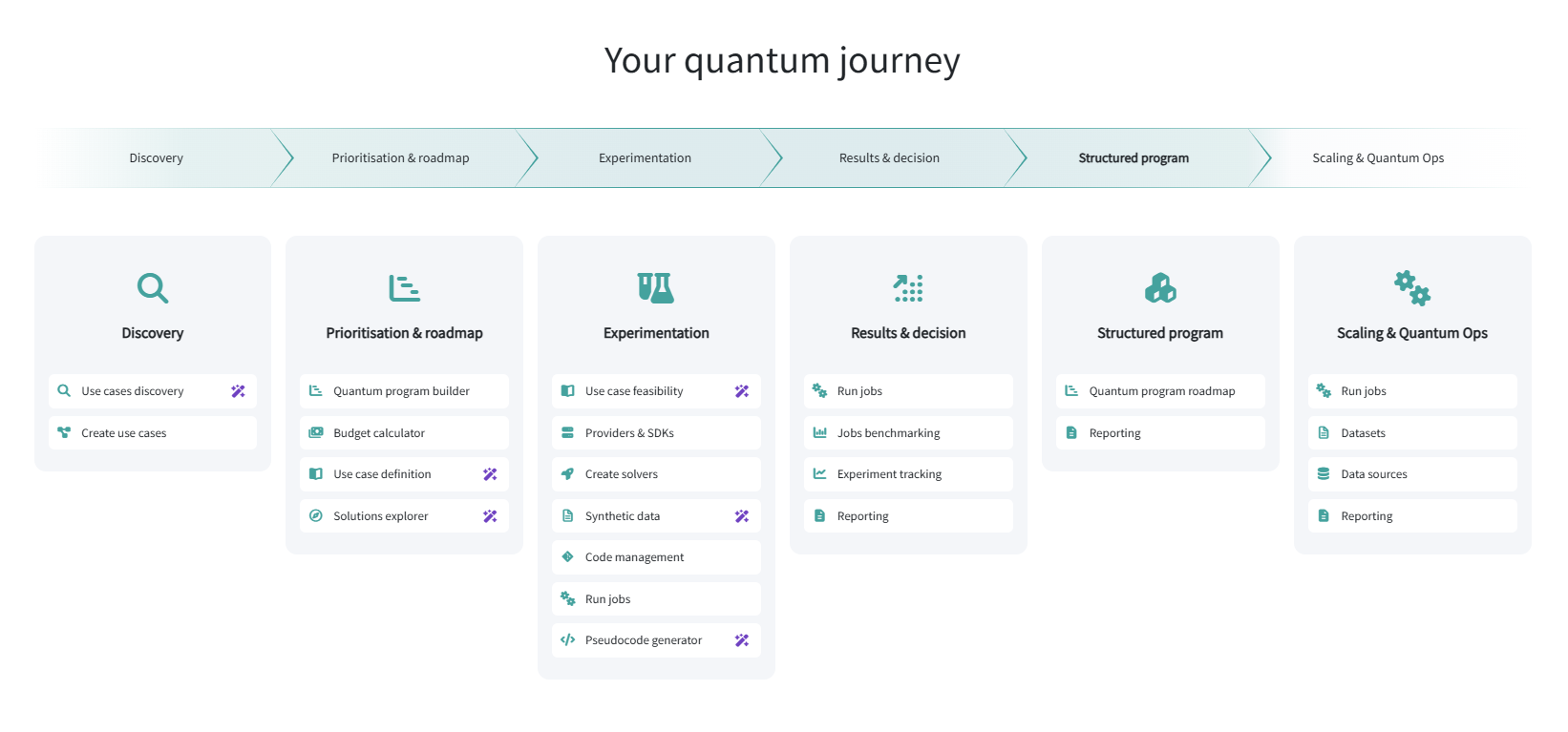
Discover & Design
Build & Run
Benchmark & Optimize
Operate & Scale
- DeploymentsSoon
- Application IntegrationsSoon
Govern & Control
Resources
Solver Workbench
From code to running solver, without the plumbing
Start from a template or connect your repository. The platform builds, validates and runs your solver across providers.









Start fast
Ready-made templates for each provider and SDK.
Keep your workflow
Connect Git; the platform builds and runs your code.
Fail early, not late
Code checked before the build, not after a failed job.
Features
Everything a solver needs, from first commit to catalog
Four tools to take an algorithm from code to a solver others can run: start from a template, connect your repository, validate the build and publish it.
Solver Templates & Runtime
Start from a ready-made template for your provider and SDK. A versioned runner handles libraries and hardware calls.
- Templates per provider and SDK
- One entry point: a single run() function
- Versioned runtime for reproducible runs
Why it mattersDevelopers write the algorithm, not the integration code.
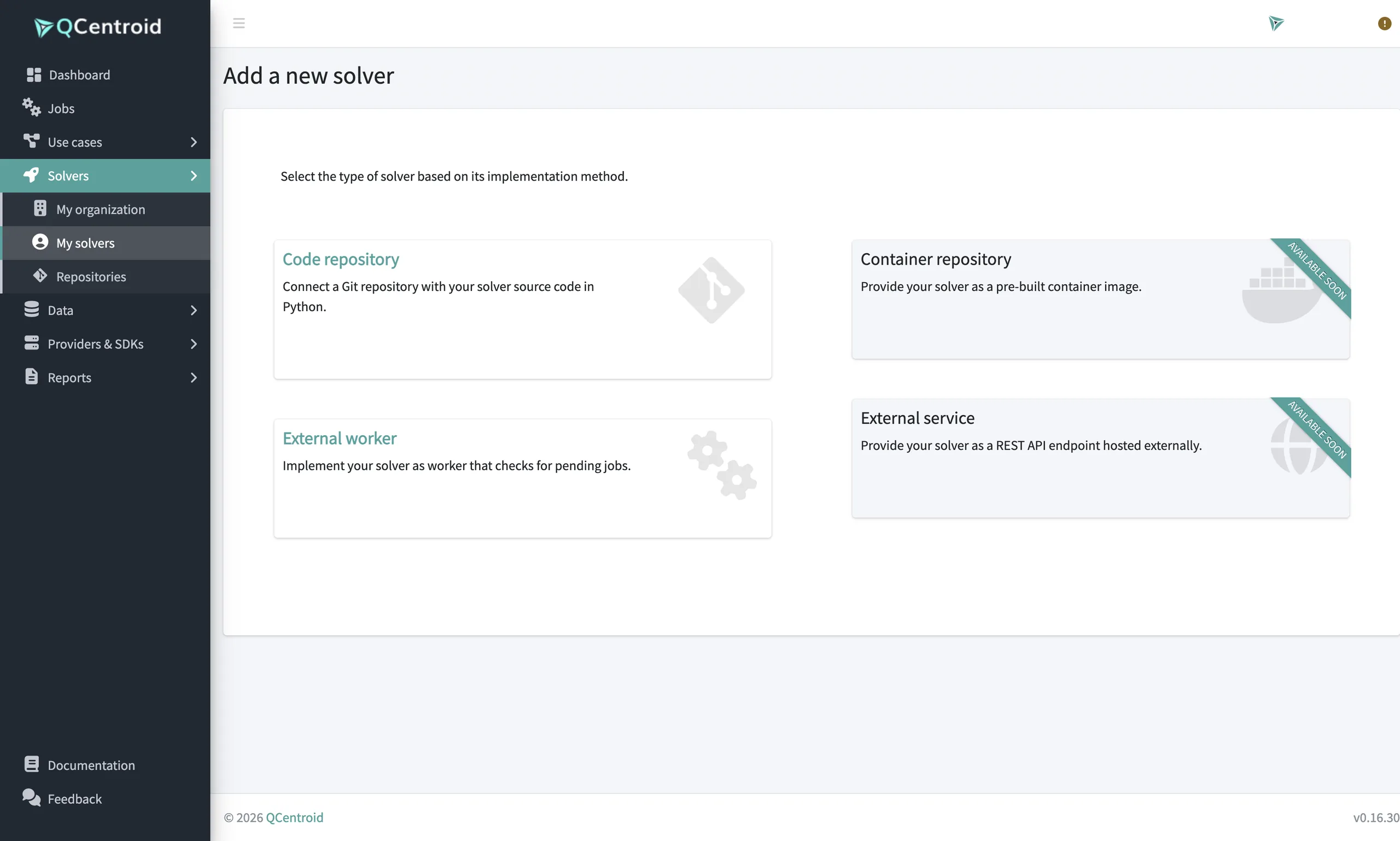
Repository-Connected Solvers
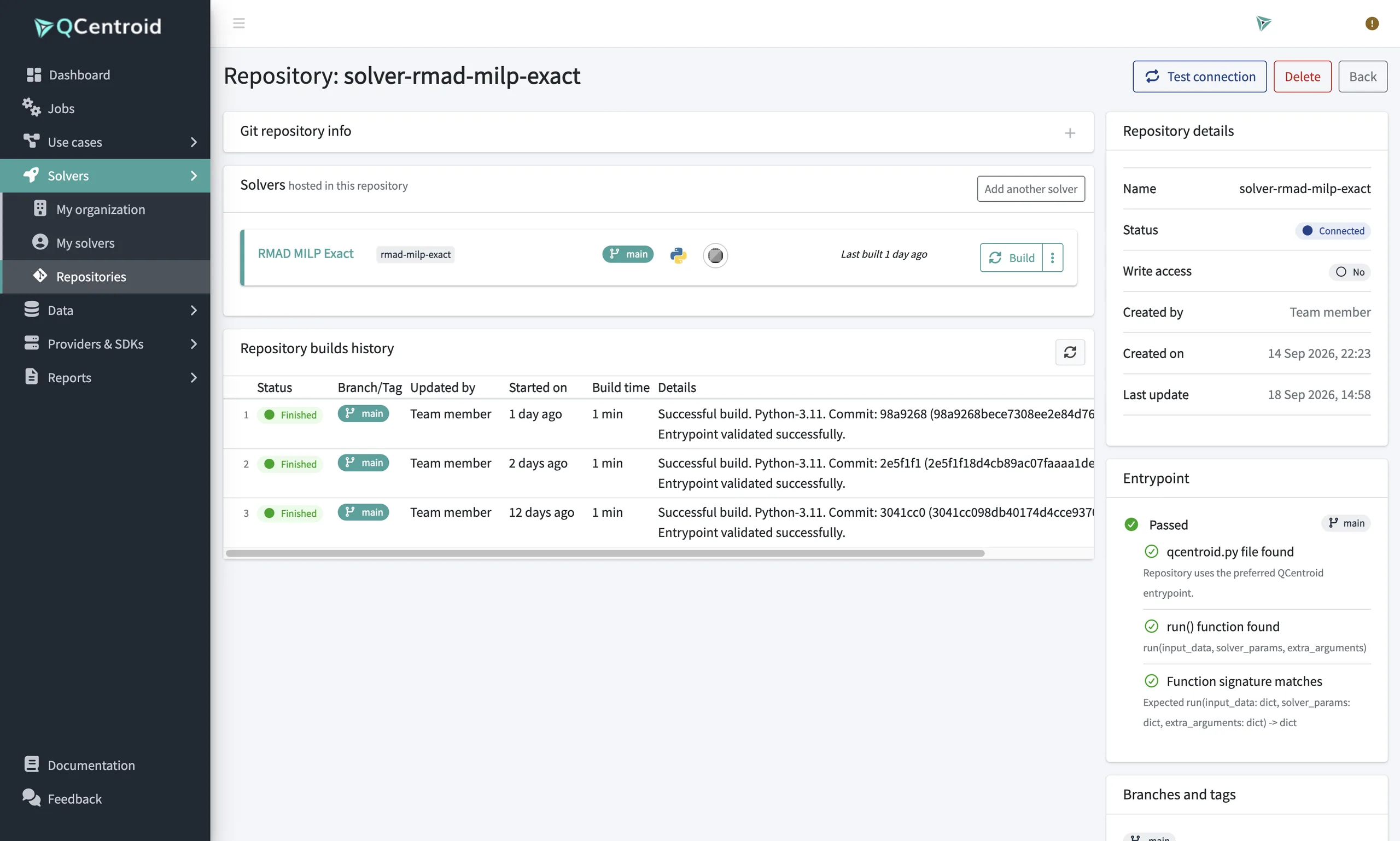
Connect a Git repository and the platform builds and runs your solver. Push a change, rebuild, run.
- Connect your Git repository in a few clicks
- Automatic build from your code and dependencies
- Rebuild after every change
Why it mattersKeep your usual tools and version control. No copying code into a web form.
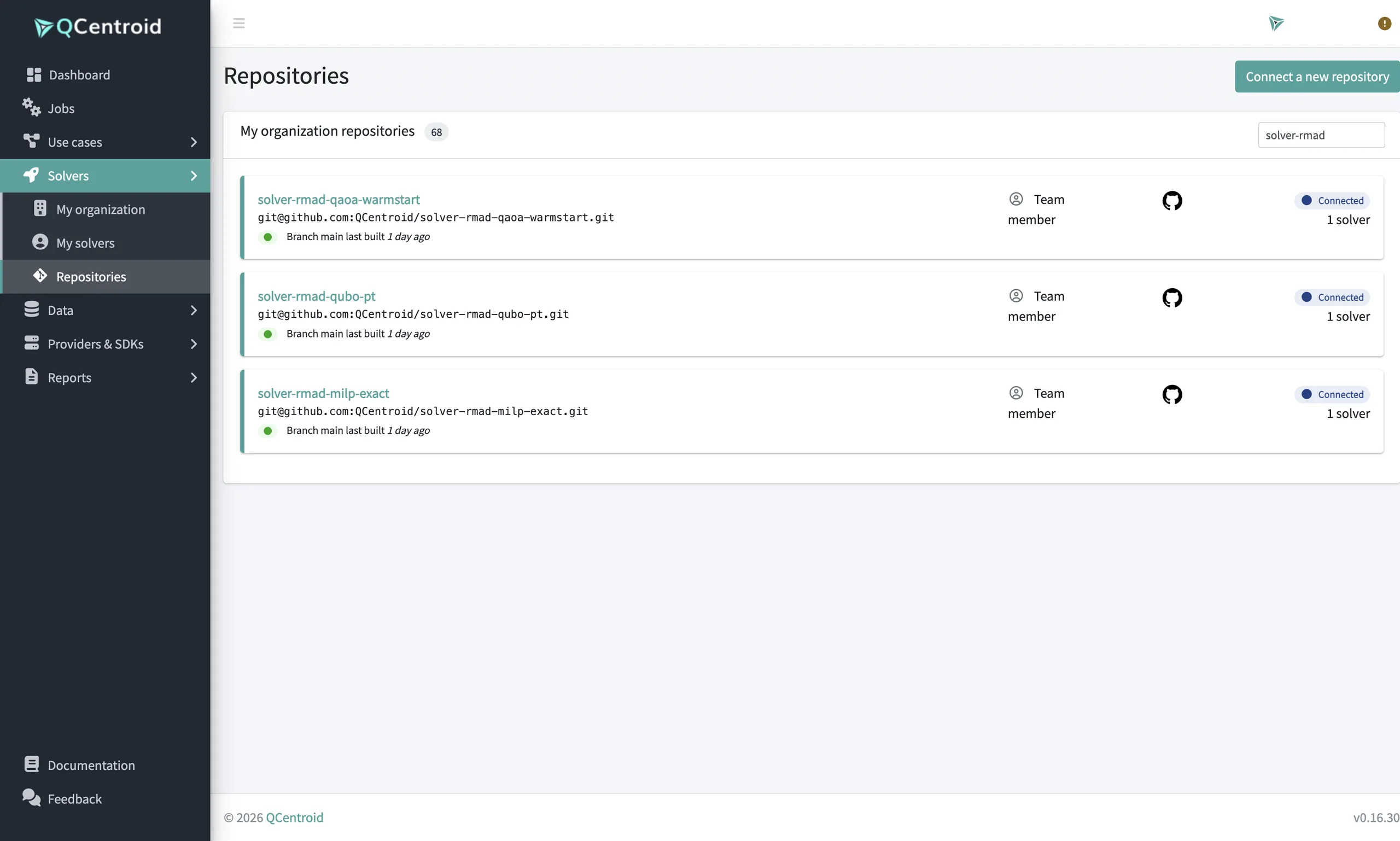
Build-Time Code Validation
The solver's code contract is checked before the build, so errors show up in seconds, not after a failed job.
- Entry point and signature checked before build
- Clear errors that point to the fix
- No compute wasted on broken builds
Why it mattersFailed jobs on real hardware cost time and money. Catch errors before they run.
Solver Catalog
Publish solvers as documented, branded entries others can find and run, with control over who sees them.
- Documentation shipped with every solver
- Branding for partner and vendor solvers
- Visibility: private, organisation or public
Why it mattersOne team's work becomes a reusable asset across your organisation or ecosystem.
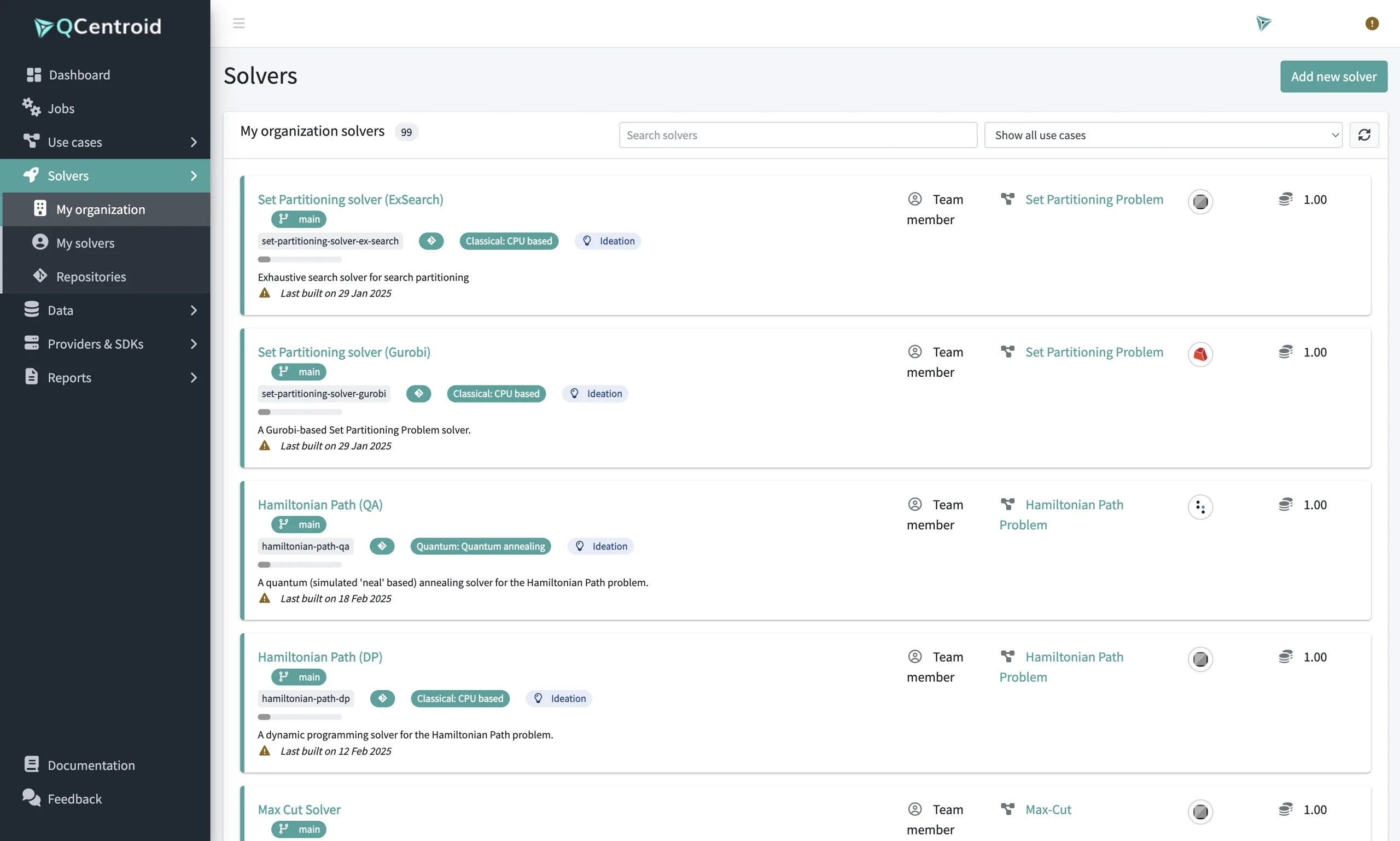
Solver Workbench
Put your algorithms to work.
Template, repository, validated build, catalog.